/filters:format(jpeg,png)/fit-in/300x300/guide_websites/1085/images/1773333909358image9.png)
/filters:format(jpeg,png)/fit-in/237x80/guide_websites/1085/images/1773333909358image9.png)
Lake Ray Hubbard Fishing Near Rockwall
%2Ffit-in%2F1000x1000%2Ffilters%3Aformat(webp)%2Fguide_websites%2F1085%2Fimages%2F1773338845571image44.png&w=1920&q=75)
Published: September 21, 2026
Lake Ray Hubbard sits just west of Rockwall and gives anglers access to a large, diverse fishery within easy reach of the Dallas-Fort Worth area. The reservoir covers more than 21,000 acres and supports white bass, crappie, blue catfish, and channel catfish. For anglers planning Lake Ray Hubbard fishing near Rockwall, the eastern shoreline provides convenient access to areas with bridge structure, humps, creek channels, flats, and other productive water. Knowing how these areas relate to different fish can make it easier to plan a productive trip instead of simply moving around a large lake without a clear strategy.
Lake Ray Hubbard Fishing Near Rockwall: What Makes This Area Different?
Rockwall's position along the eastern side of Lake Ray Hubbard makes it a practical starting point for anglers coming from the Dallas-Fort Worth area. The I-30 corridor provides access to several parts of the lake, while local launch points give anglers options for getting on the water.
The area also puts several types of fish-holding structure within reach. Road crossings create riprap and bridge structure, while submerged humps, creek channels, and flats provide different conditions for feeding and holding fish. TPWD specifically identifies roadway riprap, humps, points, standing timber, and submerged brush piles as important fishing structure on Lake Ray Hubbard.
- Rockwall shoreline: The eastern side of the reservoir provides access to the lake and several nearby launch facilities.
- I-30 corridor: The highway provides access to the lake and nearby fishing areas, including the State Highway 66 boat ramp in Rockwall.
- Bridge structure: Bridge pilings and nearby changes in depth can give anglers specific structure to work instead of searching featureless water.
- Submerged humps: These changes in bottom depth can be important areas for white bass and hybrid striped bass.
- Creek channels: Deeper channels provide another type of structure to consider, particularly when fish move away from shallow areas.
For anglers unfamiliar with the reservoir, these differences are one reason a Lake Ray Hubbard fishing guide can be useful. A large lake can have plenty of fishable water without every area producing at the same time.
What Can You Catch Near Rockwall?
Lake Ray Hubbard offers several fishing options, but the best approach changes with the species being targeted. White bass, crappie, blue catfish, and channel catfish use the reservoir differently, so knowing what each fish prefers can help narrow the search.
White Bass: Fast Action Around Open Water
White bass are a good choice for anglers who enjoy active fishing. They can be associated with baitfish, open water, humps, flats, and other areas where feeding activity develops. TPWD notes that humps and points are productive places to look for white bass, while submerged brush piles can also hold schooling fish during summer.
- Look for: Baitfish, humps, flats, points, and schooling activity.
- Best suited to: Anglers who want an active presentation and frequent movement between spots.
Crappie: Fish the Structure
Crappie fishing requires a more precise approach. Submerged brush piles, standing timber, and bridge-related structure give anglers defined areas to work. TPWD identifies submerged brush piles as important habitat for crappie and white bass on Lake Ray Hubbard.
- Look for: Brush piles, timber, bridge structure, and changes in depth.
- Common presentations: Small jigs and live minnows can be used around specific pieces of structure.
Blue and Channel Catfish: Work Deeper Water
Lake Ray Hubbard supports both blue and channel catfish, with catfish currently rated excellent by TPWD. Deeper channels, drop-offs, and other changes in bottom depth can become important areas when targeting larger fish.
- Look for: Deeper channels, drop-offs, and structural changes.
- Best suited to: Anglers specifically targeting catfish or looking for larger blue catfish.
Where to Fish Lake Ray Hubbard Near Rockwall
The Rockwall side of Lake Ray Hubbard has several types of structure worth checking. Instead of treating the shoreline as one continuous fishing area, anglers can narrow their search based on depth, structure, and the species they want to catch.
I-30 Bridge Pilings
- Bridge pilings provide a defined piece of structure to fish.
- Nearby riprap adds another type of cover.
- Roadway riprap is identified by TPWD as excellent fishing habitat on Lake Ray Hubbard.
Submerged Humps
- Humps create changes in bottom depth.
- White bass and hybrid striped bass can use these areas.
- Points extending into the lake are also worth checking when targeting these species.
Creek Channels
- Deeper channels give anglers access to different depths within the reservoir.
- These areas can be useful when fish move away from shallower water.
- They are particularly relevant when searching for deeper-holding catfish.
Flats Near the Dam
- Flats provide broad areas for baitfish and feeding fish to move through.
- Activity can vary across the flat, so depth and fish location matter.
- These areas can be worth checking when looking for active white bass.
Sapphire Bay and the Rockwall Shoreline
- Sapphire Bay provides a recognizable starting point on the Rockwall side.
- The shoreline offers convenient access to the larger reservoir.
- From there, anglers can move toward the structure that best matches the day's fishing conditions.
For Lake Ray Hubbard fishing near Rockwall, the most useful location can change with the target species and fish movement. Having several types of structure available gives anglers more options during a single trip.
How Seasonal Fish Movement Changes the Rockwall Fishing Strategy
Fish do not stay in one section of Lake Ray Hubbard throughout the year. The same structure can fish differently as water temperatures change and baitfish move.
Summer: Follow the White Bass Activity
Summer can bring active white bass fishing, particularly when baitfish gather in open water.
- Watch for: Shad, surface activity, and schooling fish
- Check: Flats, submerged humps, brush piles, and open water
- Adjust: Move when baitfish and active fish are no longer concentrated in an area
TPWD notes that submerged brush piles can hold crappie and schooling white bass during summer.
Warmer Months: Work Crappie Structure
Crappie require a more precise approach than fish moving across open water.
- Look around: Submerged brush piles, standing timber, and bridge structure
- Use: Small jigs or live minnows
- Focus on: Specific pieces of cover instead of randomly covering large areas
Winter: Move Deeper for Blue Catfish
Cold-weather fishing changes the areas worth prioritizing when larger blue catfish are the target.
- Target: Deeper river channels and structural drop-offs
- Watch for: Concentrations of fish in deeper water
- Use: Depth and structure to narrow the search
Recent TPWD survey information shows that Lake Ray Hubbard supports a strong blue catfish population, including large individuals.
The main point is simple: seasonal fishing on Lake Ray Hubbard is about following the fish, not repeatedly returning to one location.
Using Solix and Garmin LiveScope on Lake Ray HubbardUsing Solix and Garmin LiveScope on Lake Ray Hubbard
A large reservoir can take time to search. Electronics help turn that search into a more focused process by showing what is happening below and around the boat.
1. Find the Structure
Solix mapping helps identify:
- Changes in bottom depth
- Submerged humps
- Creek channels
- Flats
- Other underwater features
This gives the guide a better starting point before spending time fishing a particular area.
2. Check What Is Below the Boat
Garmin LiveScope provides a real-time view of activity beneath the boat. Instead of relying only on a sonar mark, the guide can watch fish movement and see how fish respond to a presentation.
3. Change the Presentation
The information from the electronics can lead to practical adjustments:
- Change the fishing depth
- Alter the lure or bait
- Slow down or speed up the presentation
- Reposition the boat
- Move to another piece of structure
4. Keep Testing
Seeing fish does not guarantee a bite. The useful part is being able to observe what is happening and make another adjustment.
For anglers booking Lake Ray Hubbard fishing charters, Solix and Garmin LiveScope add another layer to the guide's local knowledge. The technology helps locate structure and fish, while the guide's experience helps determine what to do with that information.
What to Expect From a Lake Ray Hubbard Fishing Charter Near RockwallWhat to Expect From a Lake Ray Hubbard Fishing Charter Near Rockwall
Booking a fishing charter takes care of many of the details that can otherwise take time before getting on the water. For anglers coming from Rockwall or the Dallas-Fort Worth area, the setup is already prepared for the fishing plan.
The boat: A fully equipped boat is provided for the trip, with the equipment needed for different fishing situations.
Fishing gear:
- Rods and reels
- Bait and lures
- Custom tackle
- Livewells
- Safety equipment
Electronics: Solix and Garmin LiveScope are available to help locate fish, structure, and changes in depth during the trip.
After the catch: Catch cleaning and filleting are included, so anglers do not have to handle that part of the process themselves after returning to shore.
What anglers need: A valid Texas fishing license is required unless the angler qualifies for an exemption. Weather-appropriate clothing, sun protection, food, drinks, and a cooler are also useful to have along.
Is a Guide Worth It for Lake Ray Hubbard Fishing Near Rockwall?
Lake Ray Hubbard covers more than 21,000 acres, so finding fish is not simply a matter of reaching the lake and casting. Different species can be using completely different areas at the same time.
A local guide can help with the parts of the trip that require knowledge of the reservoir:
- Location: Identify areas worth checking based on the target species and current conditions.
- Structure: Understand how bridge pilings, humps, channels, flats, and other features fit into the fishing plan.
- Season: Adjust the trip as fish movement changes throughout the year.
- Technique: Choose presentations that match the species and location being fished.
- Electronics: Use mapping and LiveScope information to narrow down productive water.
- Time on the water: Spend less of the trip searching and more time actually fishing.
This can be particularly useful for anglers searching for a fishing guide near Dallas who want to fish Lake Ray Hubbard without having to learn the entire reservoir on their own.
Fish Lake Ray Hubbard Near Rockwall With Lead SlingersFish Lake Ray Hubbard Near Rockwall With Lead Slingers
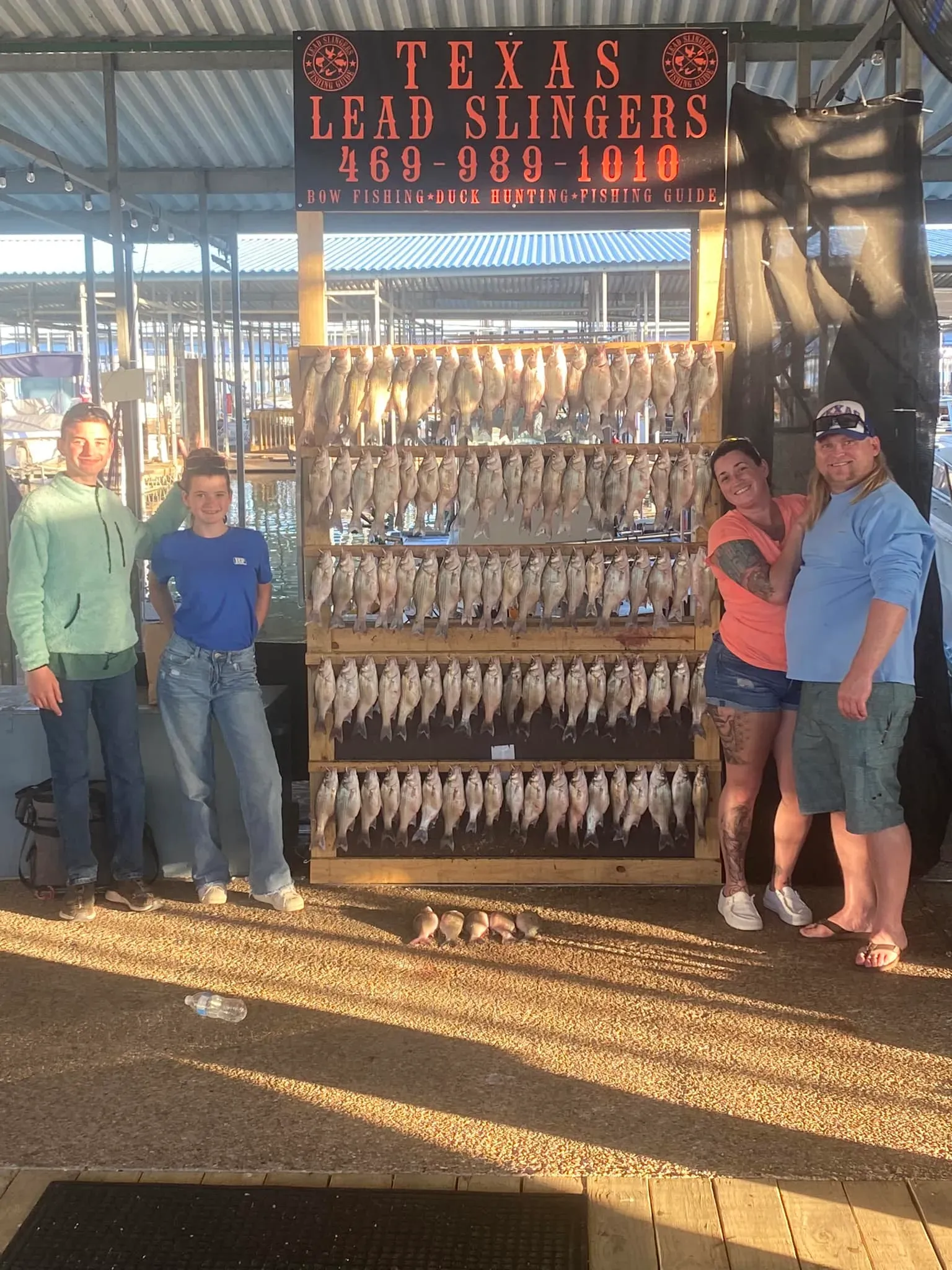
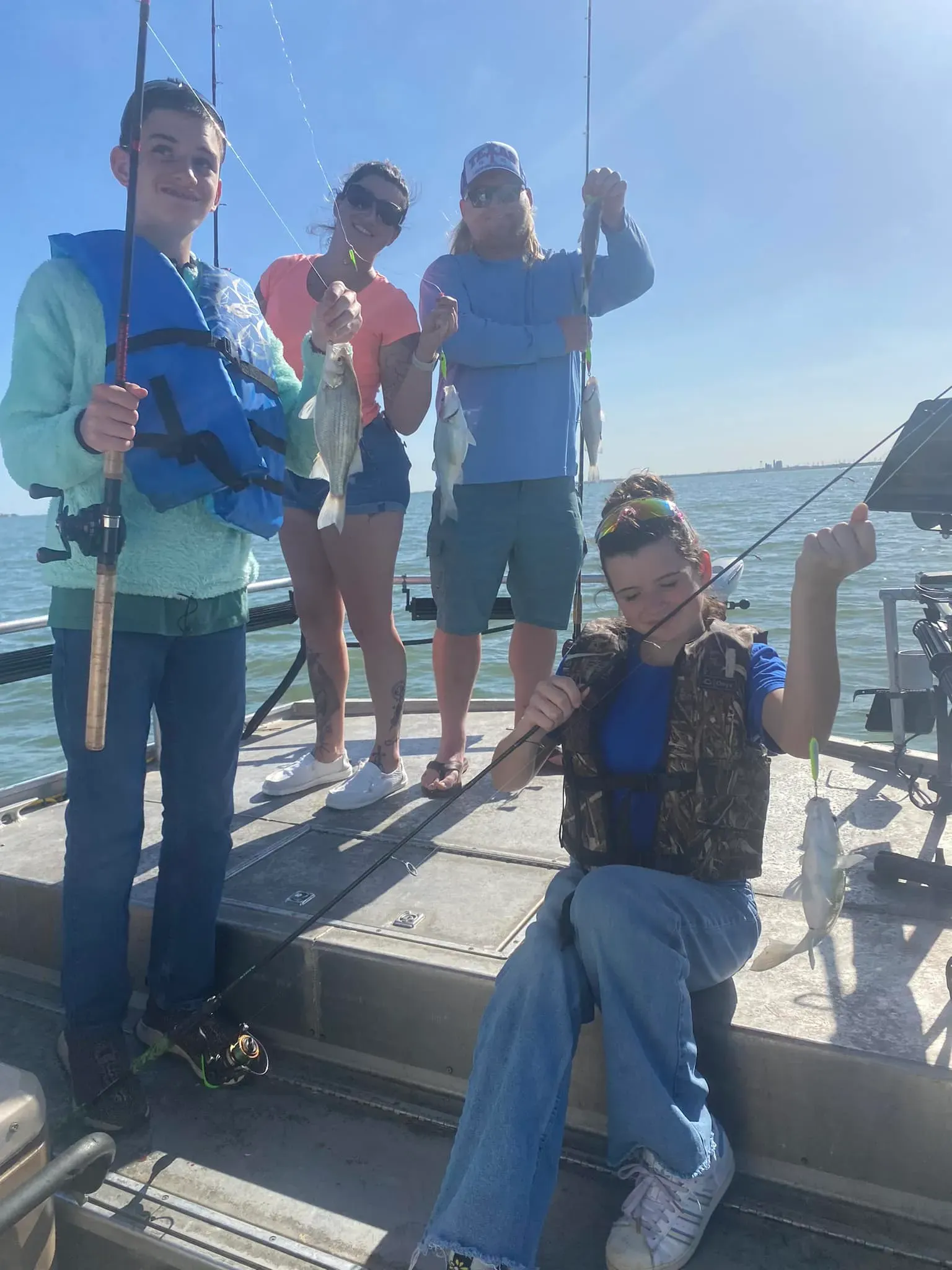
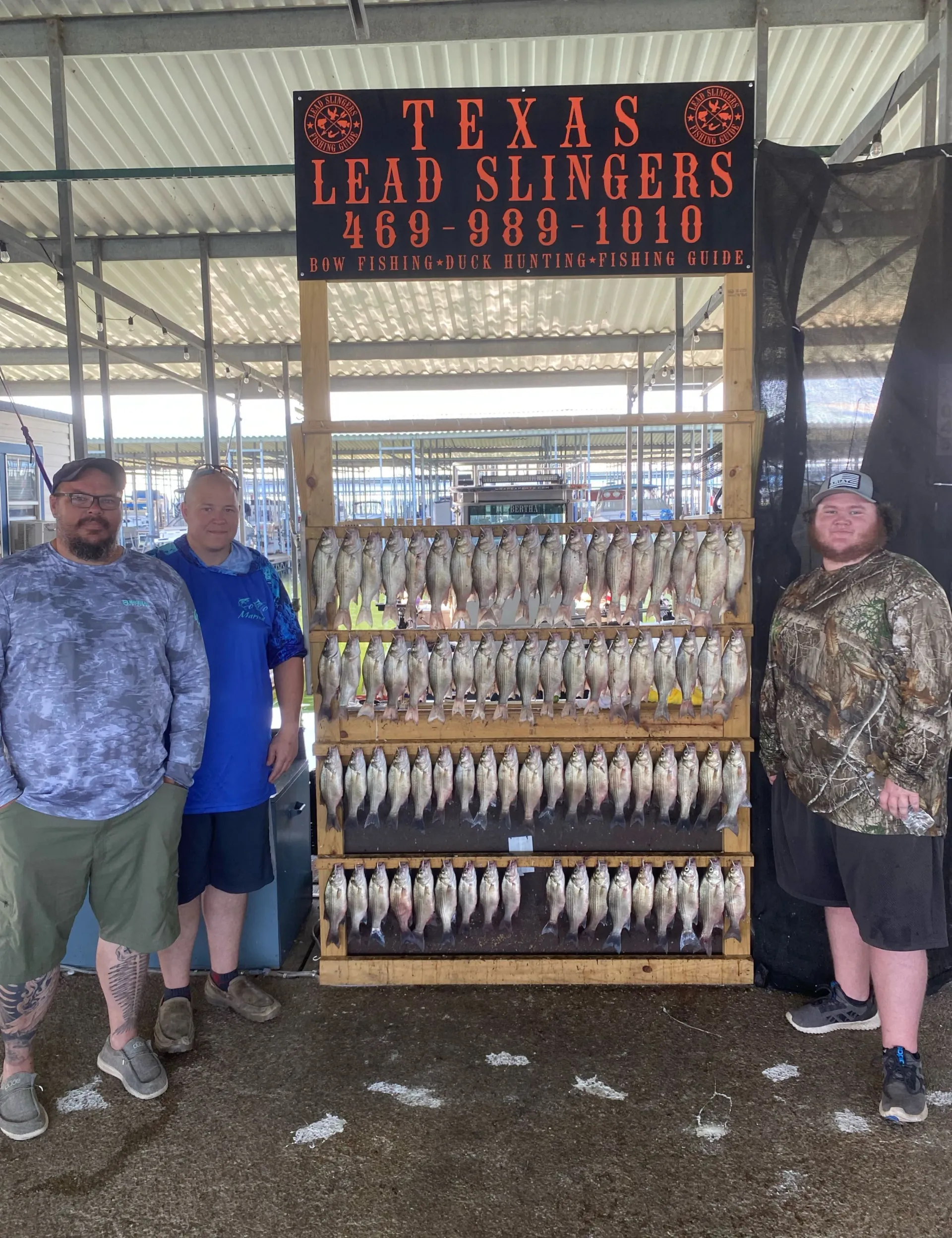
Lead Slingers approaches a Rockwall-area fishing trip around the conditions on the lake and the species being targeted. Our guides work with anglers looking for white bass, crappie, blue catfish, or channel catfish, adjusting the fishing plan as the day develops.
Our fully equipped boat carries the rods, reels, bait, lures, and custom tackle needed for the trip. We also use Solix mapping and Garmin LiveScope to examine structure and fish activity while we are on the water. That information gives us another way to decide where to spend time and how to change the presentation.
Brandon Sargent brings more than eight years of guiding experience in the Dallas-Fort Worth area, while William Guy focuses on catfishing. We also handle catch cleaning and filleting after the trip. For anglers planning Lake Ray Hubbard fishing trips near Rockwall, our goal is to make the fishing plan fit the lake, the target species, and the people on the boat.
Conclusion
Lake Ray Hubbard fishing near Rockwall gives anglers access to a large reservoir with several species and different types of productive structure. Bridge pilings, humps, creek channels, and flats can all play a role depending on the season and target fish. Using current conditions and electronics such as Solix and Garmin LiveScope can also help narrow the search. Ready to plan your next trip? Book a Lake Ray Hubbard fishing trip with Lead Slingers and fish with a local guide who knows the water.
FAQs
- Is Lake Ray Hubbard good for fishing near Rockwall?
Yes. Lake Ray Hubbard offers white bass, crappie, blue catfish, and channel catfish, with several fishing areas accessible from Rockwall. - What fish can you catch near Rockwall on Lake Ray Hubbard?
Anglers can target white bass, crappie, blue catfish, and channel catfish, depending on the season and current fishing conditions. - Where should you fish on Lake Ray Hubbard near Rockwall?
Bridge pilings, submerged humps, creek channels, flats, and other structural areas can be useful starting points around the Rockwall side. - What is the best area for white bass near Rockwall?
White bass can be found around humps, points, flats, open water, and areas where shad and schooling activity are present. - Where can you find crappie near Rockwall on Lake Ray Hubbard?
Check submerged brush piles, standing timber, bridge structure, and other areas that provide cover and changes in depth. - Can you catch large catfish near Rockwall?
Yes. Lake Ray Hubbard supports blue and channel catfish, including large blue catfish that can be found around deeper structure. - What does a Lake Ray Hubbard fishing charter include?
Charters include a fully equipped boat, rods, reels, bait, lures, custom tackle, safety equipment, and catch cleaning and filleting. - Do I need a Texas fishing license to fish Lake Ray Hubbard?
A valid Texas fishing license is required unless you qualify for an applicable exemption. Check current Texas regulations before fishing. - Is hiring a fishing guide near Dallas worth it for Lake Ray Hubbard?
A guide can help anglers locate productive structure, select techniques, use electronics, and adjust the fishing plan to current conditions. - Can you combine Lake Ray Hubbard fishing with hog hunting near Dallas?
Yes. Lead Slingers also offers outdoor trips that can combine Lake Ray Hubbard fishing with nighttime hog hunting.