/filters:format(jpeg,png)/fit-in/300x300/guide_websites/1085/images/1773333909358image9.png)
/filters:format(jpeg,png)/fit-in/237x80/guide_websites/1085/images/1773333909358image9.png)
Best Baits for Catfish on Lake Ray Hubbard
%2Ffit-in%2F1000x1000%2Ffilters%3Aformat(webp)%2Fguide_websites%2F1085%2Fimages%2F1773338845571image44.png&w=1920&q=75)
Published: September 21, 2026
Catfish are one of the main species anglers target on Lake Ray Hubbard, but bait selection can affect how effectively you find and catch them. Blue and channel catfish have different feeding habits, so the best bait depends on the species, fish size, location, and fishing conditions. Cut shad, live bait, and prepared baits are among the main options to consider. For anglers planning Lake Ray Hubbard catfish fishing, knowing how each bait works can help you choose the right presentation before heading onto the water.
What Are the Best Baits for Catfish on Lake Ray Hubbard?
The best bait depends largely on the type of catfish you want to catch. Cut shad is a strong choice for blue catfish, especially when targeting larger fish. Live bait provides a natural presentation, while prepared baits can be useful for channel catfish.
- Best overall natural bait: Cut shad for blue catfish and larger fish.
- Best natural presentation: Live bait when catfish are actively feeding on baitfish.
- Best for channel catfish: Prepared and stink baits that create a strong scent trail.
- Best for larger catfish: Larger pieces of natural bait matched to the size of fish you are targeting.
Your location also matters. Deep channels, points, structure, and areas holding baitfish can all influence how you should present your bait. Choosing the bait first and then matching it to the fishing location can make your Lake Ray Hubbard fishing trips more productive.
1. Cut Shad: Best Bait for Blue Catfish
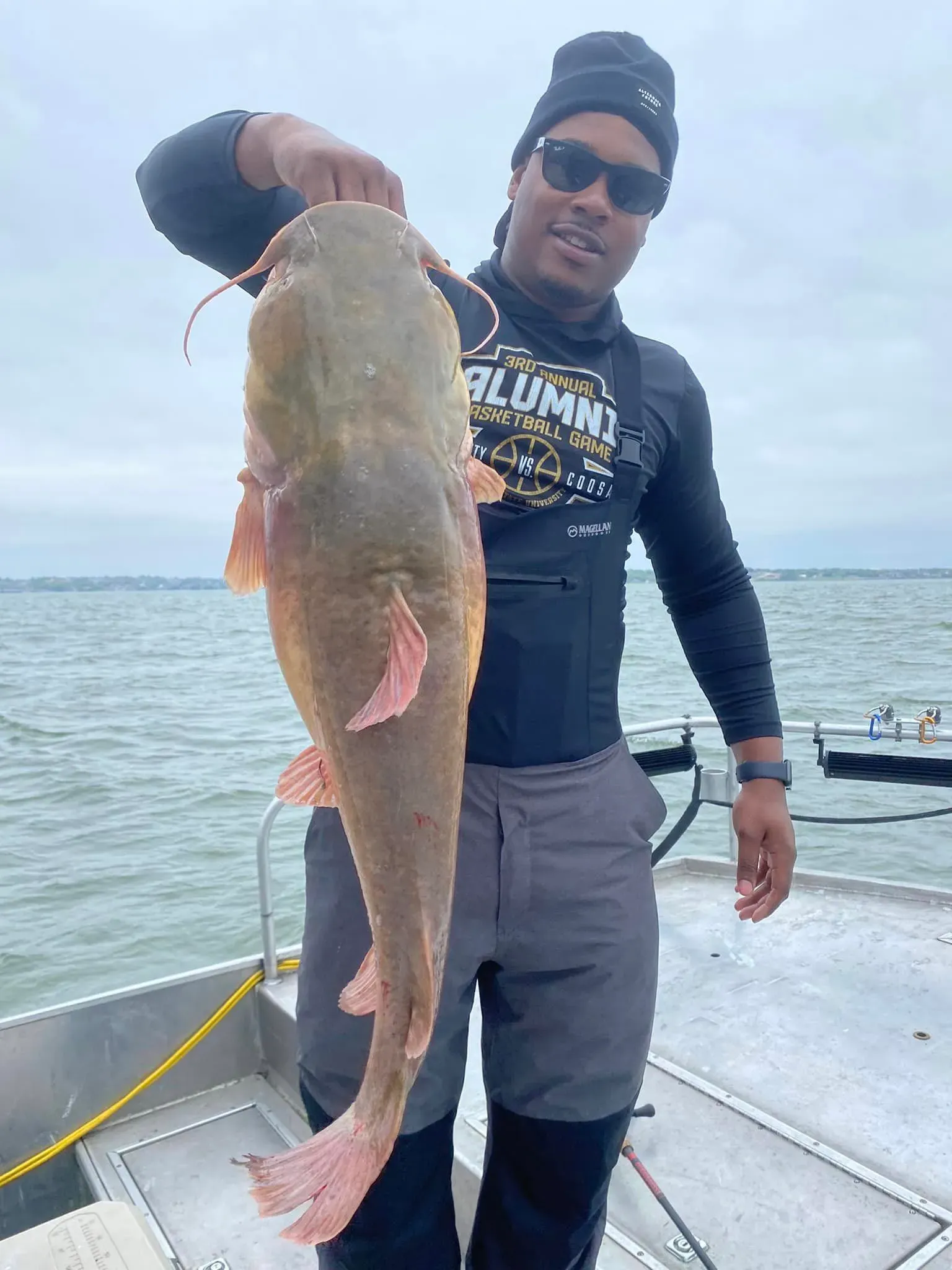
Cut shad is one of the most useful natural bait options for blue catfish on Lake Ray Hubbard. Shad are part of the lake's forage base, making them a familiar food source for catfish. Cutting the bait exposes more surface area and releases scent into the surrounding water.
- Best for: Blue catfish and anglers targeting larger fish
- Where to use it: Deep water, river channels, channel edges, and areas where baitfish are concentrated
- How to present it: Cut shad into pieces that match the size of the fish you are targeting and keep the bait positioned near likely feeding areas.
Fresh shad is generally preferred because it maintains better texture and scent. Frozen shad can also work when fresh bait is unavailable, but careful handling helps keep the pieces intact on the hook.
For trophy catfish fishing Lake Ray Hubbard, bait size should match the fish you are targeting. Larger chunks can provide a bigger profile for blue catfish, while smaller pieces may make more sense when targeting mixed-size fish.
2. Live Bait: A Natural Presentation for Catfish
Live bait gives catfish a moving, natural-looking food source. It can be useful when fish are actively feeding on live forage or when you want to cover an area with a presentation that closely resembles what catfish already encounter.
- Best for: Active blue and channel catfish
- Where to use it: Areas near channels, points, structure, and concentrations of baitfish
- How to present it: Keep the bait lively and use a hook setup that allows natural movement without restricting it unnecessarily.
Live bait can be especially useful when conditions change and catfish are not responding well to stationary presentations. The right bait size should still match the target fish and fishing location.
3. Prepared Baits: A Practical Choice for Channel Catfish
Prepared and stink baits offer a different approach by relying heavily on scent to attract catfish. They can be convenient to handle and are particularly useful when targeting channel catfish.
- Best for: Channel catfish and steady fishing action
- Where to use it: Areas where channel catfish are feeding, including productive flats and structure
- How to present it: Secure the bait properly on the hook and keep it in the strike zone long enough for scent to disperse.
Prepared bait is a practical option for anglers who want an easy-to-handle bait that does not require keeping live forage in good condition. It can also be paired with a bottom-fishing setup to keep the bait near feeding fish.
Best Bait for Blue Catfish vs. Channel Catfish
Choosing bait becomes easier once you know which catfish you are targeting. Lake Ray Hubbard holds both blue and channel catfish, but the most effective bait can differ based on fish size, feeding behavior, and where you are fishing.
- For Blue Catfish: Cut shad is a strong choice because it provides a natural baitfish profile and scent. Larger pieces can be useful when targeting bigger blue catfish around deeper water and channels.
- For Channel Catfish: Prepared baits, stink baits, and smaller pieces of natural bait can all be useful. Scent can help attract channel catfish, especially when fishing a stationary presentation.
- For Larger Catfish: Use a larger natural bait presentation when your goal is a bigger blue catfish. Match the bait size to the fish you are targeting rather than automatically using the largest piece available.
How to Choose the Right Catfish Bait for Lake Ray Hubbard
There is no single bait that works best in every situation. Start with the fish you want to catch, then consider the conditions and location before deciding what to put on the hook.
- Target species: Blue catfish generally call for natural baitfish presentations, while channel catfish can respond well to prepared baits and smaller natural offerings.
- Target size: Larger blue catfish can justify a larger bait profile. Smaller pieces may be more appropriate when targeting mixed-size fish.
- Water conditions: Scent can become an important part of bait selection, particularly when visibility is limited in stained water.
- Fishing location: Match your bait to the area you are fishing. Deep channels, points, timber, and areas holding baitfish can require different presentations.
- Fishing method: Bottom fishing, drifting, and anchored fishing each change how your bait moves and where it stays in the water.
How to Rig Catfish Bait on Lake Ray Hubbard
The right bait still needs to be presented properly. Your rig should keep the bait secure while placing it where catfish are likely to encounter it.
Bottom Fishing
Bottom fishing keeps cut bait or prepared bait close to the lake floor. This can be useful around deeper water, channels, and other areas where catfish are holding.
Good choice for: Cut shad, prepared bait, and stationary presentations
Drift Fishing
Drifting allows bait to move through different areas while you cover water. Cut bait can be particularly useful because its scent can spread as the boat moves.
Good choice for: Searching larger areas and locating active catfish
Anchored Fishing
Anchoring lets you concentrate your bait in one area. This approach can work well when you have identified a productive point, channel edge, or structure holding fish.
Good choice for: Keeping bait in a known productive area
The key is to keep your bait in the zone where fish are feeding rather than simply putting bait in the water and waiting. For anglers booking a Lake Ray Hubbard fishing guide, an experienced guide can also help determine how to position and present bait based on current lake conditions.
Where to Fish Your Bait on Lake Ray Hubbard
The right bait works best when it is placed where catfish are likely to feed or travel. On Lake Ray Hubbard, location can be just as important as the bait itself. Focus on areas that provide depth, structure, or access to baitfish.
- Deep Water and River Channels: Blue catfish often use deeper areas, especially when conditions push fish away from shallow water. Try presenting cut bait near channel edges or deeper sections.
- Points and Channel Edges: These areas can create natural travel routes where catfish move while feeding. Position your bait along the edge rather than directly on top of shallow structure.
- Standing Timber: Lake Ray Hubbard has substantial standing timber, particularly above I-30. Fish your bait carefully around this cover while keeping your rig positioned where catfish can reach it.
- Baitfish Areas: Look for signs of baitfish activity and position natural bait nearby. Concentrations of forage can attract larger predatory fish, making these areas worth checking during Lake Ray Hubbard catfish fishing.
Best Bait for Night Fishing on Lake Ray Hubbard
Night fishing can be productive for catfish, particularly during warmer periods when fish become more active after sunset. Bait selection should help catfish locate your offering in low-light conditions.
- Cut Shad: A strong option for blue catfish because its natural scent can spread through the water. Use appropriately sized pieces when targeting larger fish.
- Prepared Bait: A practical choice for channel catfish when you want a strong scent-based presentation that stays in one area.
- Live Bait: Useful when catfish are actively feeding on natural forage and you want your bait to provide movement as well as scent.
For night fishing Lake Ray Hubbard, keep your bait near productive depths, channels, points, or other areas where catfish are likely to move after dark. Staying focused on one productive area can be more effective than constantly changing locations without a clear reason.
Fish Lake Ray Hubbard With Lead SlingersFish Lake Ray Hubbard With Lead Slingers
Choosing the right bait is only one part of a successful catfish trip. At Lead Slingers, we fish Lake Ray Hubbard with the equipment, bait, and local knowledge needed to help anglers target catfish in changing lake conditions.
Our trips are fully equipped, so you do not have to bring your own rods, reels, tackle, or bait. We also use modern fish-finding technology, including Garmin LiveScope and Solix, to locate fish and identify productive areas. After the trip, catch cleaning and filleting are included.
If you are planning Lake Ray Hubbard fishing trips and want to spend your time targeting catfish instead of figuring out the lake on your own, our guides can help you choose the right bait, location, and presentation for the conditions.
Conclusion
The best catfish bait on Lake Ray Hubbard depends on the species, fish size, location, and fishing conditions. Cut shad is a strong choice for blue catfish, while prepared baits and smaller natural offerings can work well for channel catfish. Live bait is another option when catfish are actively feeding on natural forage. Match your bait to the fish you are targeting and present it around productive areas such as channels, points, deeper water, and structure. Ready to put the right bait to work on Lake Ray Hubbard? Book a fishing trip with Lead Slingers and let our local guides help you target catfish based on the conditions.
FAQs
- What is the best bait for catfish on Lake Ray Hubbard?
Cut shad is a strong choice for blue catfish, while prepared bait and smaller natural baits can work well for channel catfish. - Is cut shad good for blue catfish on Lake Ray Hubbard?
Yes. Cut shad provides a natural baitfish profile and scent, making it a useful option when targeting blue catfish. - What bait catches channel catfish on Lake Ray Hubbard?
Channel catfish can respond to prepared baits, stink baits, live bait, and smaller pieces of natural bait. - Is live bait effective for Lake Ray Hubbard catfish?
Live bait can be effective when catfish are actively feeding on natural forage. Keep the bait lively and match its size to your target. - Are stink baits good for catfish on Lake Ray Hubbard?
Stink baits can be useful for channel catfish because their strong scent can help attract fish to a stationary presentation. - What is the best bait for trophy catfish on Lake Ray Hubbard?
Larger pieces of natural bait such as cut shad can be a practical choice when targeting bigger blue catfish. - Should I use fresh or frozen shad for catfish?
Fresh shad is generally preferred for its texture and scent, but properly handled frozen shad can also be used when fresh bait is unavailable. - What bait should I use for night fishing on Lake Ray Hubbard?
Cut shad and prepared bait are useful options at night. Choose based on your target species and where catfish are holding. - What size bait should I use for blue catfish?
Match bait size to the fish you are targeting. Larger pieces can provide a bigger profile when pursuing larger blue catfish. - Can a Lake Ray Hubbard fishing guide help choose the right catfish bait?
Yes. A local guide can help select bait and presentation based on the target species, fishing location, water conditions, and current activity.