/filters:format(jpeg,png)/fit-in/300x300/guide_websites/1085/images/1773333909358image9.png)
/filters:format(jpeg,png)/fit-in/237x80/guide_websites/1085/images/1773333909358image9.png)
Lake Ray Hubbard Fishing in Winter
%2Ffit-in%2F1000x1000%2Ffilters%3Aformat(webp)%2Fguide_websites%2F1085%2Fimages%2F1773338845571image44.png&w=1920&q=75)
Published: September 21, 2026
Winter changes the way fish use Lake Ray Hubbard as falling water temperatures slow activity and shift fish toward more stable depths. White bass, crappie, and catfish remain available, but their locations can change with weather, forage, and water temperature. Anglers planning Lake Ray Hubbard fishing in winter should pay close attention to depth, structure, and baitfish before choosing where to fish. Threadfin shad and gizzard shad can influence predator locations, while colder weather may concentrate fish around channels, brush, timber, points, and other areas with suitable depth. Using electronics to locate fish and adjusting bait or presentation can make winter trips more productive.
What Happens to Fish on Lake Ray Hubbard in Winter?
Cold water changes how fish move and feed. Finding the right combination of depth, structure, and forage can make winter fishing more productive.
Cooler Water
As water temperatures fall, fish generally become less active and may stay in areas with more stable conditions.
Look for:
- Deeper channels
- Channel edges
- Brush and timber
- Points and other depth changes
Checking several depths around the same structure can help locate fish that are holding tightly.
Threadfin Shad and Gizzard Shad
Threadfin shad and gizzard shad are important forage in Lake Ray Hubbard. Their location can provide useful clues when searching for white bass, catfish, and other predators.
Watch for:
- Concentrated baitfish
- Suspended shad
- Shad near deeper water
- Predator activity around bait schools
Using electronics to locate bait can help narrow down productive areas instead of fishing large sections of open water.
Winter Shad Die-Offs
Severe cold snaps can stress or kill threadfin shad. When dead shad settle toward the bottom, catfish may feed on them as natural forage.
During these conditions:
- Check deeper areas where dead shad collect.
- Use cut shad when targeting catfish.
- Watch electronics for bait and fish near the bottom.
- Adjust lure size when targeting white bass feeding on smaller or weakened shad.
Best Fish to Catch on Lake Ray Hubbard in Winter
Three of the most practical winter targets are white bass, crappie, and catfish. Each species uses different areas, so match your location and presentation to the fish you want to catch.
White Bass
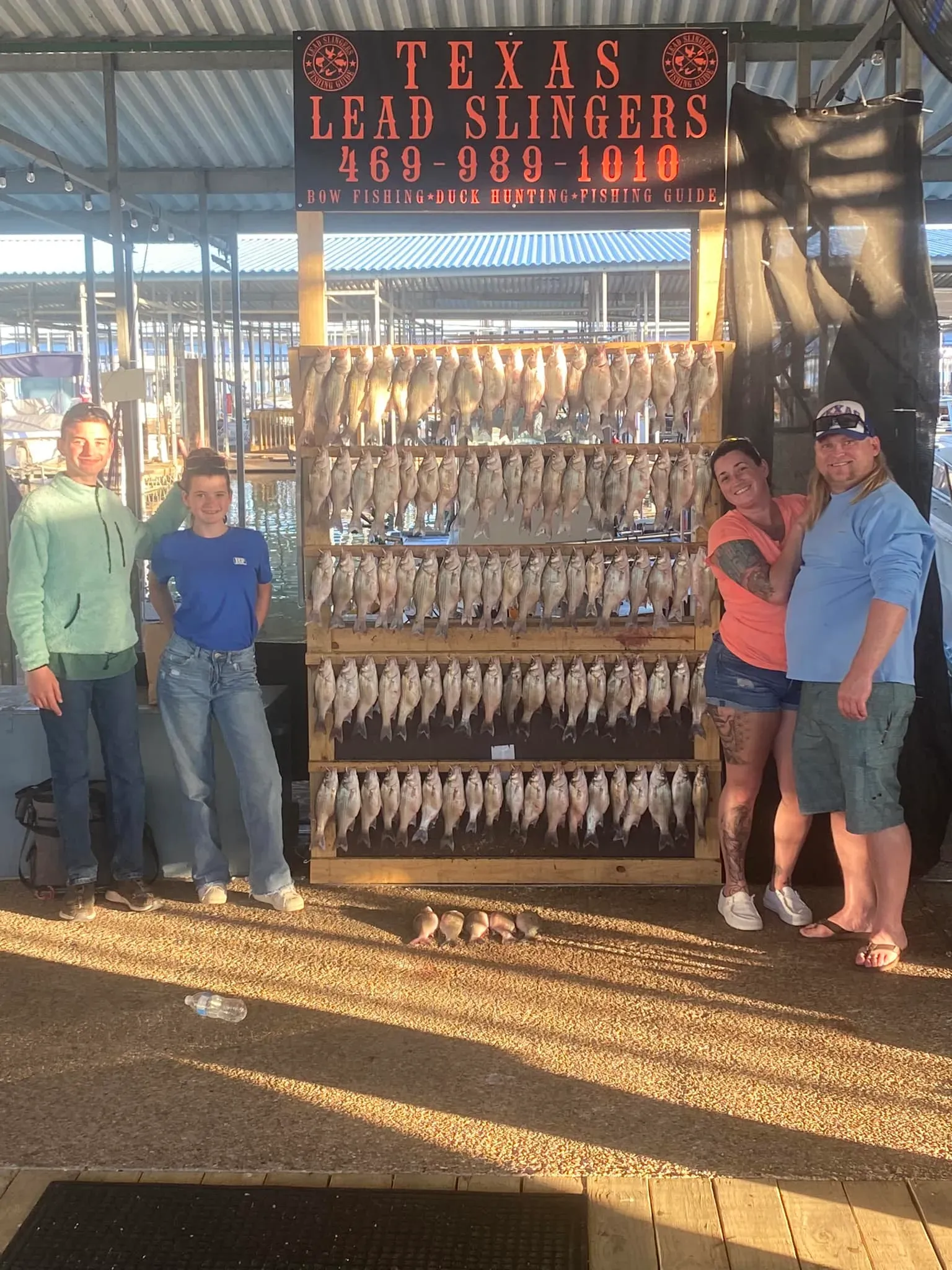
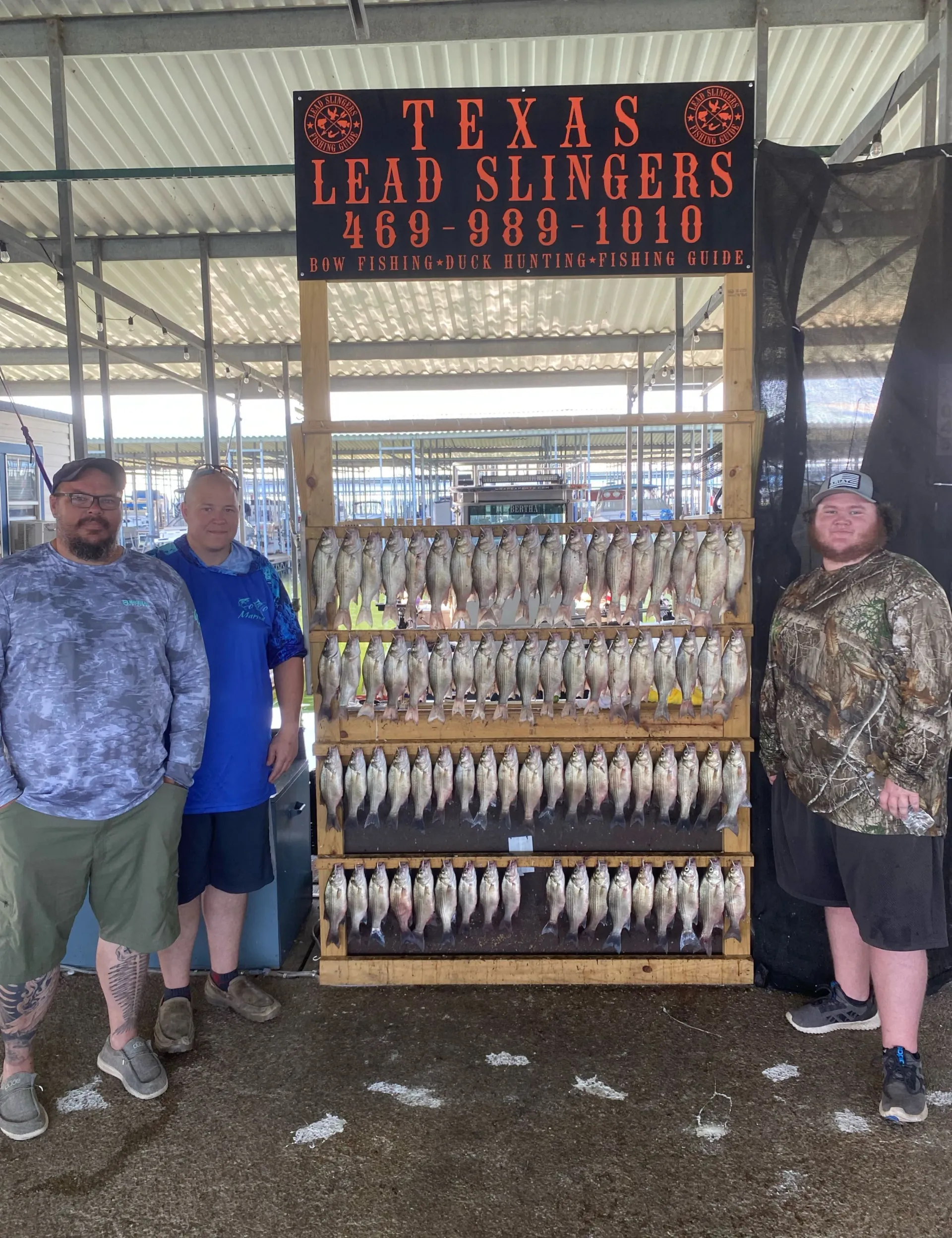
Lake Ray Hubbard white bass fishing can remain productive during winter when anglers locate schools of shad.
Look for:
- Points
- Humps
- Channel edges
- Deeper open water
- Concentrated baitfish
Try: Slabs, jigs, and slow presentations when fish are less active.
Use electronics to identify the depth of suspended white bass and keep your lure near the fish instead of working the entire water column.
Crappie
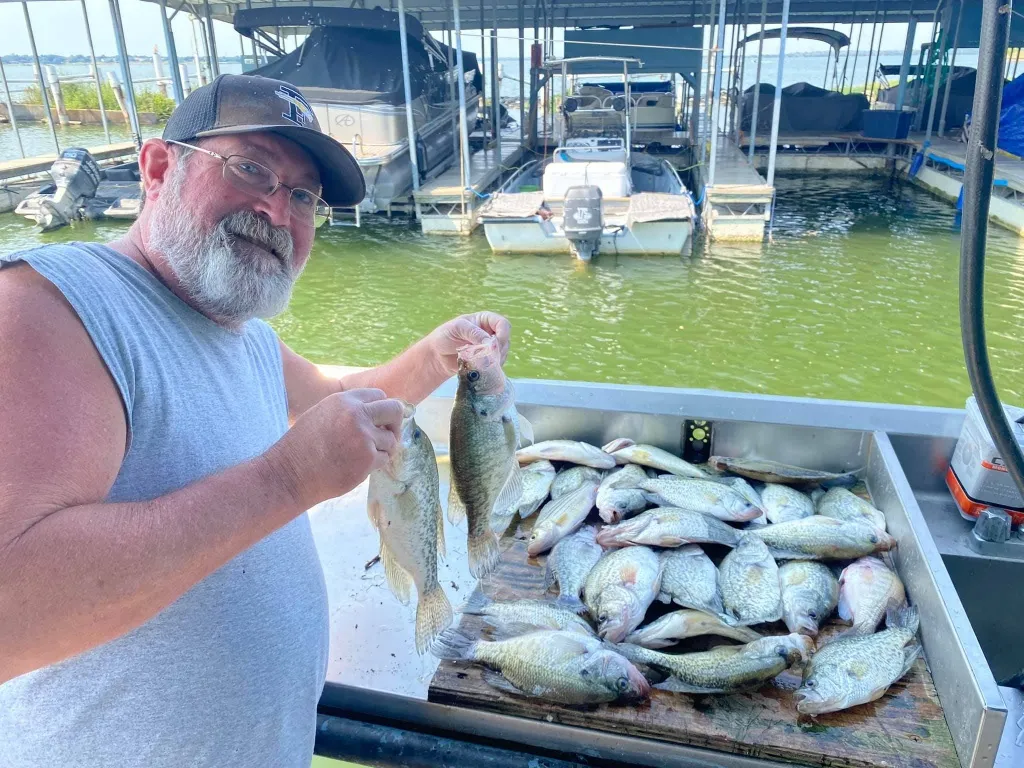
Lake Ray Hubbard crappie fishing can be productive around deeper cover during colder weather.
Key areas:
- Deep brush piles
- Standing timber
- Bridge structures
- Structure near deeper water
Go-to presentations:
- Live minnows
- Small jigs
- Tight-lined rigs
Crappie can hold tightly to structure at a specific depth. Check different depths around the same brush pile until you locate the active fish.
Catfish
Lake Ray Hubbard catfish fishing remains a practical winter option, especially around deeper channels, flats, and areas holding shad.
For blue catfish:
- Use cut shad or other natural bait.
- Focus on deeper channels and flats.
- Watch for areas holding larger forage.
For channel catfish:
- Check flats and structure.
- Use natural bait around feeding areas.
For trophy catfish fishing Lake Ray Hubbard, pay particular attention to deeper water and areas where shad are concentrated, especially following a significant cold snap.
Best Winter Fishing Spots on Lake Ray Hubbard
Winter fish often concentrate around deeper water, structure, and areas holding baitfish. Named locations can narrow your search, but fish position still changes with temperature, forage, wind, and weather.
I-30 Bridge Riprap
The I-30 bridge riprap provides rocky structure, depth changes, and current that can attract baitfish and predators during winter, making it worth checking for active fish.
Look for:
- Baitfish near the rocks
- Deeper water beside the riprap
- White bass following forage
- Fish around depth changes
State Highway 66 Bridge
State Highway 66 bridge structure creates changes in depth and cover where baitfish can gather, giving anglers another winter location to check for crappie and catfish.
- For crappie: Check different depths around bridge structure and nearby cover.
- For catfish: Work deeper edges and areas where bait is concentrated.
Robertson Park and Terry Park Areas
The Robertson Park and Terry Park areas offer shoreline structure and access to nearby depth changes that can help anglers locate winter fish around transitional water.
Check for:
- Baitfish activity
- Drop-offs
- Nearby points
- Deeper water near structure
Deep Humps and Channels
Submerged humps and channel edges can hold winter fish when temperatures fall, especially where baitfish gather and deeper water provides more stable conditions for feeding fish.
Use electronics to find:
- Baitfish schools
- Suspended white bass
- Fish near channel edges
- Changes in bottom depth
Best Time of Winter to Fish Lake Ray Hubbard
Winter fishing changes as water temperatures move through the season. Early winter can retain fall patterns, while colder periods often concentrate fish around deeper, stable areas.
Early Winter
Early winter can still produce some late-fall fishing patterns, particularly during warmer weather when fish remain active around baitfish and transitional areas.
Focus on:
- Points
- Humps
- Channel edges
- Baitfish schools
Mid-Winter
Mid-winter often brings the coldest water, making fish location and depth especially important when searching for concentrated schools or fish holding around structure.
Best approach:
- Use electronics first.
- Identify the fish depth.
- Keep your presentation near that depth.
- Avoid moving constantly without locating forage.
Late Winter
Late winter can bring gradually warming water and increasing activity, with white bass responding to baitfish movement and crappie changing depth around established structure.
Watch for:
- Rising water temperatures
- Increased baitfish activity
- White bass movement
- Crappie shifting depth
Best Winter Fishing Techniques on Lake Ray Hubbard
Winter fishing often calls for slower, controlled presentations and precise depth control. Match your technique to the target species, water temperature, forage, and fish location.
Slabs and Jigs for White Bass
Slabs and jigs are useful winter presentations for Lake Ray Hubbard white bass fishing, particularly when fish are grouped around baitfish, channels, points, or deeper structure.
Try this approach:
- Locate baitfish with electronics.
- Drop the lure to the fish.
- Use a controlled retrieve.
- Slow the presentation when fish are inactive.
Deadsticking Soft PlasticsDeadsticking Soft Plastics
Deadsticking soft plastics can work when suspended white bass are reluctant to chase, allowing anglers to keep a bait nearly motionless at the depth where fish are holding.
Key point: Use electronics to locate the fish, then maintain the bait at their depth with minimal movement.
Tight-Lining Minnows for Crappie
Tight-lining live minnows keeps the bait near deep brush where winter crappie often hold, allowing anglers to control depth and presentation around specific pieces of structure.
For Lake Ray Hubbard crappie fishing:
- Locate brush with electronics.
- Start at the marked fish depth.
- Keep the minnow close to cover.
- Adjust depth when fish move.
Drifting for Catfish
Drifting cut shad across deeper flats helps cover water when catfish are spread out, making it useful for locating active fish before concentrating on productive areas.
Best for:
- Searching large flats
- Covering different depths
- Finding scattered blue catfish
- Following baitfish concentrations
Anchoring for Catfish
Anchoring works better when electronics show concentrated catfish around a specific area, allowing anglers to keep natural bait positioned near the productive depth.
For Lake Ray Hubbard catfish fishing:
- Anchor over identified fish.
- Present cut bait near the bottom.
- Monitor the fish depth.
- Move if activity does not develop.
Family Fishing Trips on Lake Ray Hubbard in Winter
Winter can make fishing more challenging for families, so choosing the right weather window, fishing period, and target species helps keep everyone comfortable and involved.
Choose a Better Weather Window
Check the forecast before leaving because North Texas weather can change quickly. Sudden Texas Northers can bring strong winds and sharp temperature drops, making conditions uncomfortable or unsafe.
Plan around:
- Lower wind speeds
- Stable temperatures
- Warmer daytime hours
- Clear weather conditions
Dress for Cold Water
Cold winter water increases the consequences of falling overboard, so proper clothing and safety equipment are essential. Wear layers, keep spare clothing available, and use properly fitted PFDs throughout the trip.
Keep the Trip Manageable
Shorter trips during the warmer part of the day can work better for family fishing Lake Ray Hubbard. Choose a target such as crappie or catfish and focus on a few productive areas instead of constantly moving.
Night Fishing on Lake Ray Hubbard in Winter
Night fishing Lake Ray Hubbard requires more preparation during winter because darkness, cold water, wind, and changing weather can increase the risks involved with being on the lake.
Focus on Productive Structure
Bridge areas, deep brush, points, and channel edges can provide winter habitat for crappie and catfish. Use electronics to locate fish before setting your presentation at the appropriate depth.
Prepare for Cold Conditions
Cold temperatures become more difficult to manage after sunset, particularly when wind increases. Wear insulated layers, carry extra clothing, and keep safety equipment accessible throughout the trip.
Use Proper Boat Lighting
Navigation lights, a reliable flashlight, and charged electronics are important after dark. Check equipment before leaving the dock and avoid unfamiliar areas when visibility is limited.
How to Plan a Winter Lake Ray Hubbard Fishing Trip
Planning around weather, target species, water temperature, baitfish, and fishing depth can make a winter trip more productive. Use these steps before heading out onto Lake Ray Hubbard.
- Step 1: Check the Weather Forecast: Review wind speed, temperature, and approaching weather systems before leaving. Sudden Texas Northers can bring strong winds and rapid temperature drops that make lake conditions unsafe.
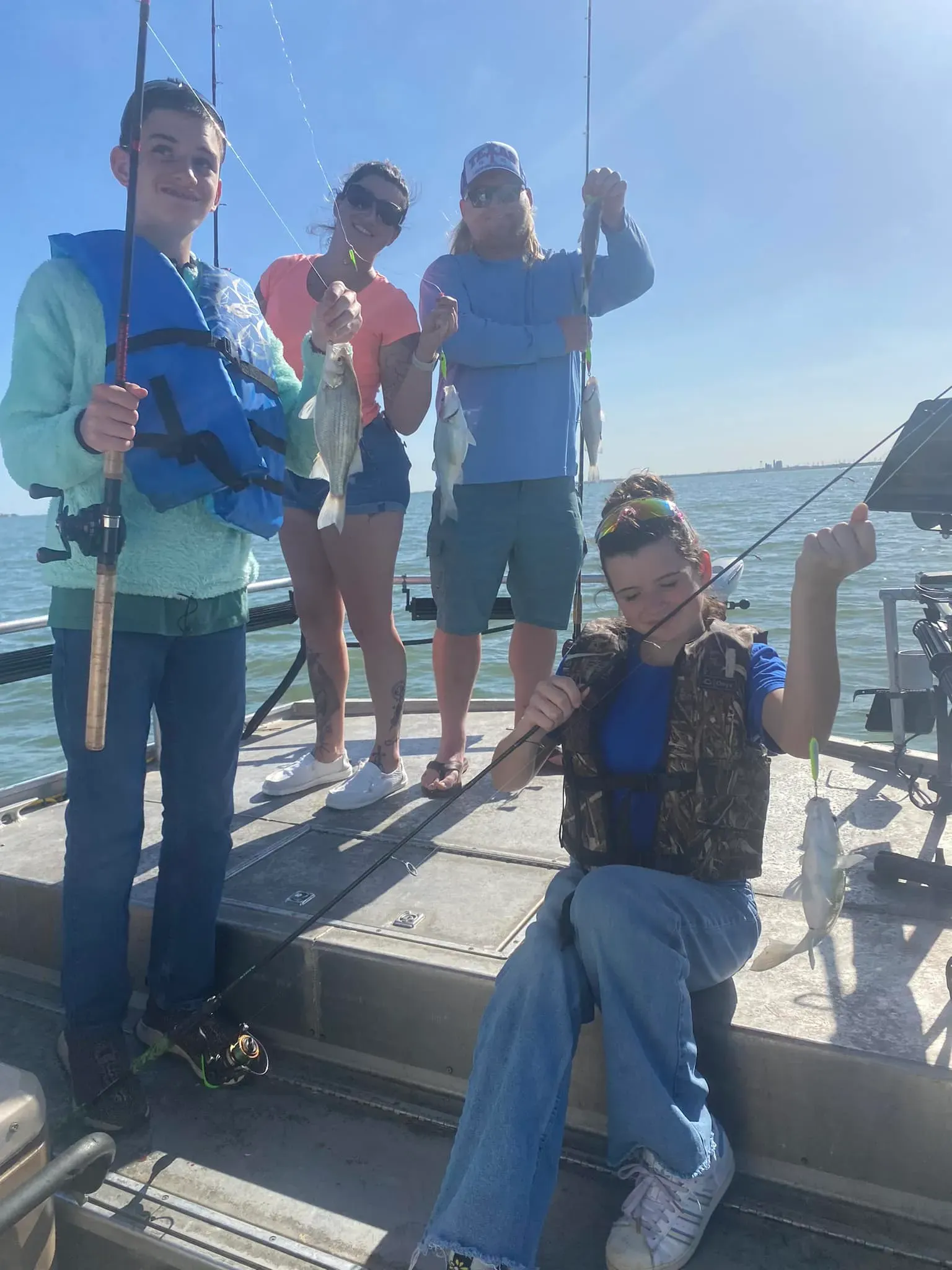
- Step 2: Choose Your Target Species: Decide if you plan to target white bass, crappie, or catfish. Your target determines the bait, tackle, fishing depth, and locations you should prioritize.
- Step 3: Prepare the Right Bait: Pack slabs and jigs for white bass, live minnows for crappie, and cut shad or other natural bait for catfish.
- Step 4: Dress for Winter Conditions: Wear warm layers and bring rain protection. Cold water also increases the risk of cold shock, so properly fitted PFDs should be worn on the boat.
- Step 5: Check Your Fishing Equipment: Make sure rods, reels, tackle, landing equipment, electronics, and other necessary gear are ready before leaving the dock.
- Step 6: Locate Fish and Baitfish: Use electronics to identify depth, structure, baitfish, and fish before settling into an area. Adjust your presentation when fish are holding at a different depth.
- Step 7: Confirm Your Trip Details: Anglers booking Lake Ray Hubbard fishing charters or fishing trips near Dallas should confirm the meeting location, equipment, bait, trip duration, and target species with their guide.
Fish Lake Ray Hubbard With Lead SlingersFish Lake Ray Hubbard With Lead Slingers
Winter fishing rewards anglers who can adjust quickly when fish move with changing water temperatures and forage. At Lead Slingers, we use our knowledge of Lake Ray Hubbard to help anglers spend their time working areas that fit the day's conditions.
Our guides can help target white bass, crappie, blue catfish, and channel catfish during winter trips. We use Solix and Garmin LiveScope electronics to identify fish, baitfish, structure, and productive depths, then select techniques that match what we find. Slabs, jigs, minnows, and natural bait can all have a place depending on the species and conditions.
Each trip includes the fishing equipment, bait, lures, and tackle needed for the day. Catch cleaning and filleting are also included, and our trips are suitable for beginners, experienced anglers, and families. For anglers planning Lake Ray Hubbard fishing trips during the colder months, having a guide who can adjust the approach as conditions change can make the day more productive.
Conclusion
Winter fishing on Lake Ray Hubbard requires anglers to pay closer attention to water temperature, baitfish, depth, and changing weather. White bass, crappie, and catfish can all provide opportunities when you locate the right structure and adjust your presentation. Electronics can help identify fish and forage, while choosing a safe weather window is especially important during colder months. If you want local guidance for your next winter outing, book a Lake Ray Hubbard fishing trip with Lead Slingers and fish with an experienced local guide.
FAQs
- Is winter a good time to fish Lake Ray Hubbard?
Yes. Winter can provide good fishing for white bass, crappie, and catfish when anglers adjust their depth, bait, and techniques to colder conditions. - What fish can you catch on Lake Ray Hubbard in winter?
Common winter targets include white bass, crappie, blue catfish, and channel catfish. Fish location and activity can change with water temperature and forage. - Where do white bass go in winter on Lake Ray Hubbard?
White bass may hold around deeper channels, points, humps, and areas where baitfish concentrate. Electronics can help identify their location and depth. - Where can I find crappie on Lake Ray Hubbard in winter?
Winter crappie can hold around deep brush piles, standing timber, bridge structures, and other areas providing suitable depth and cover. - What is the best bait for Lake Ray Hubbard catfish in winter?
Cut shad is a practical choice for blue catfish. Bait selection can vary based on forage activity, water conditions, and the size of fish being targeted. - Can you catch trophy catfish on Lake Ray Hubbard in winter?
Yes. Large blue catfish are present in Lake Ray Hubbard, and winter anglers can target deeper areas where baitfish and catfish are concentrated. - What lures work best for winter white bass on Lake Ray Hubbard?
Slabs, jigs, and soft plastics can work for winter white bass. The best presentation depends on fish activity, depth, and the location of baitfish. - What depth should I fish for crappie in winter on Lake Ray Hubbard?
There is no single depth that works throughout winter. Use electronics to locate crappie and brush, then keep your bait near the depth where fish are holding. - Is night fishing Lake Ray Hubbard good in winter?
Night fishing can produce opportunities for crappie and catfish, but cold temperatures, wind, darkness, and changing weather require additional preparation and safety precautions. - Can a Lake Ray Hubbard fishing guide help with winter fishing?
Yes. A local guide can help identify productive areas, locate fish with electronics, select suitable techniques, and adjust the trip based on current winter conditions.