/filters:format(jpeg,png)/fit-in/300x300/guide_websites/1085/images/1773333909358image9.png)
/filters:format(jpeg,png)/fit-in/237x80/guide_websites/1085/images/1773333909358image9.png)
Lake Ray Hubbard Fishing in Spring
%2Ffit-in%2F1000x1000%2Ffilters%3Aformat(webp)%2Fguide_websites%2F1085%2Fimages%2F1773338845571image44.png&w=1920&q=75)
Published: September 21, 2026
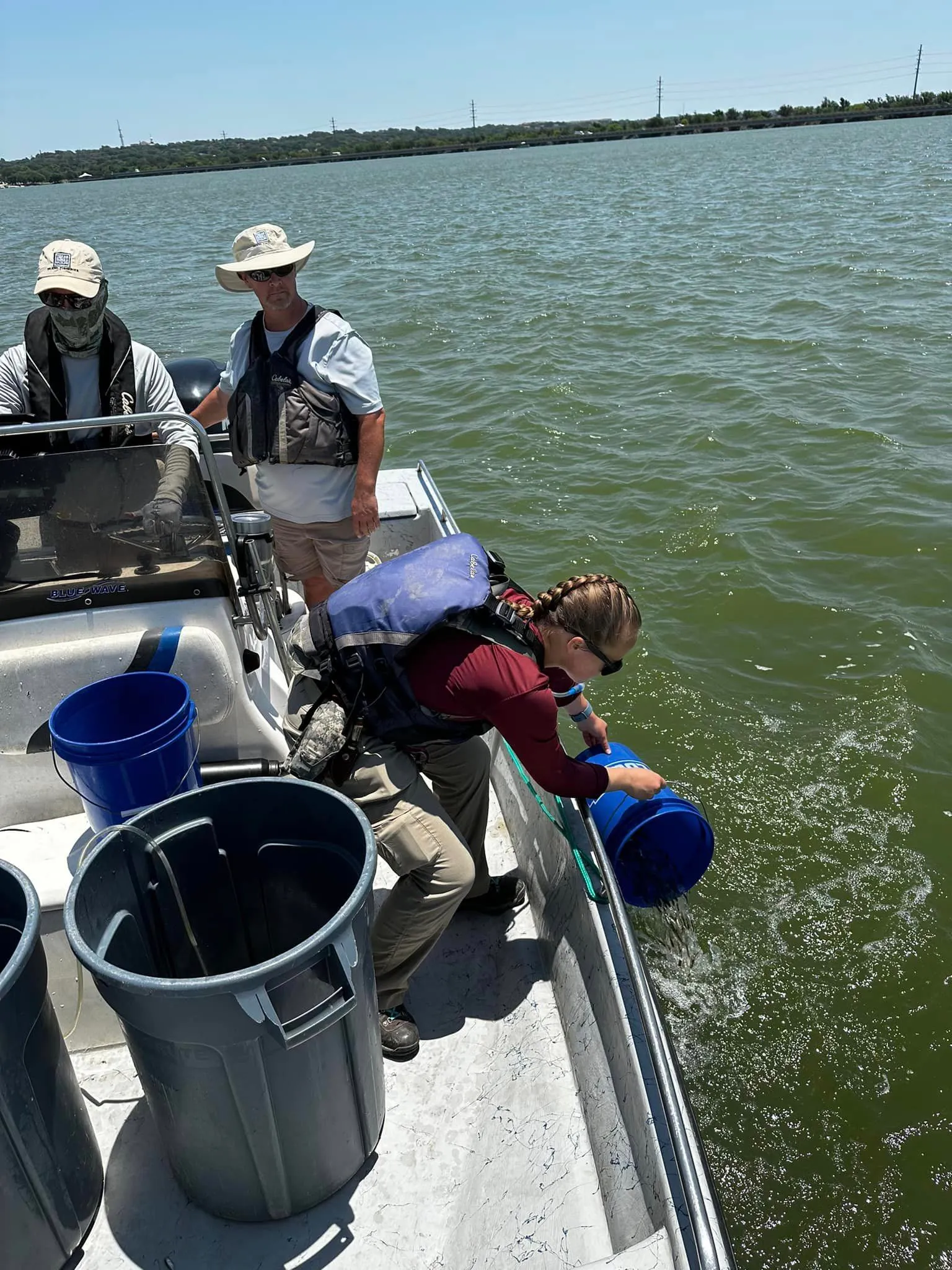
Spring brings noticeable changes to Lake Ray Hubbard as rising water temperatures increase fish activity and movement. Anglers can target white bass, crappie, catfish, and other species as fish move between deeper and shallower water. Points, channels, brush piles, timber, and flats can all become productive as conditions change. Understanding these seasonal movements can help anglers choose better locations and techniques throughout the spring.
What Makes Spring a Good Time to Fish Lake Ray Hubbard?
Spring is a period of increased fish activity on Lake Ray Hubbard. As water temperatures rise, fish become more active and begin moving between deeper water, structure, feeding areas, and shallower habitat.
- Rising water temperatures: Warmer water can increase fish activity and trigger seasonal movement. Early in spring, fish may remain near deeper transition areas before gradually moving shallower.
- More forage activity: Baitfish become more active as water conditions improve. Areas holding forage can attract predatory species such as white bass and larger fish looking for an easy meal.
- Changing fish locations: Fish do not stay in one area throughout the season. Points, channels, timber, brush, creek-related areas, and flats can all become productive as spring progresses.
Best Fish to Catch on Lake Ray Hubbard in Spring
Spring offers several productive species on Lake Ray Hubbard, with white bass, crappie, and catfish providing different fishing opportunities as water temperatures rise.
White Bass
White bass become increasingly active during spring, making this a popular period for Lake Ray Hubbard white bass fishing. Fish can move toward points, humps, channels, and creek-related areas as they follow seasonal movements and baitfish.
- Early spring: Check deeper transition areas, channel edges, and points.
- Later spring: Look for fish moving toward shallower areas and feeding more actively around structure and bait.
Crappie
Crappie can move toward spawning areas as spring water temperatures increase. Brush piles, standing timber, and bridge structures can hold fish during different stages of this movement.
- Early spring: Start around deeper brush and timber before checking shallower cover.
- As water warms: Move toward shallower structure and spawning areas where crappie become more active.
This seasonal movement makes Lake Ray Hubbard crappie fishing especially dependent on water temperature and fish location.
Catfish
Catfish can become more active as spring progresses and water temperatures rise. Channels, points, flats, and areas holding baitfish can all be worth checking.
- Blue catfish: Target deeper edges, channels, and areas with natural baitfish activity.
- Channel catfish: Look around feeding areas, flats, and structure where natural forage is available.
Best Spring Fishing Spots on Lake Ray Hubbard
Spring fish movement makes several types of structure useful at different points in the season. Water temperature and forage activity can determine which areas hold fish on a particular day.
Points and Humps
Points and underwater humps create changes in depth that can attract feeding fish during spring. White bass often use these areas as they move through the lake and follow baitfish. Start by checking deeper edges in early spring, then work shallower sections as water temperatures rise and fish become more active.
Creek and Channel Areas
Creek channels and their surrounding edges provide deeper water close to shallower habitat. These areas can be productive during spring as fish move between depths. White bass may use channels during seasonal movement, while crappie and catfish can hold near nearby structure, cover, and changes in depth.
Brush Piles and Standing Timber
Brush piles and standing timber provide important cover for crappie and other fish throughout spring. Crappie can hold at different depths depending on water temperature and spawning activity. Fish the deeper side of the cover early in the season, then check shallower timber and brush as conditions warm.
Shallow Flats
Shallow flats become increasingly useful as spring progresses and water temperatures climb. Flats located near points, channels, creek areas, or other structure can attract fish looking for food or spawning habitat. They are especially worth checking later in spring when crappie and white bass become more comfortable using shallower water.
Best Time of Spring to Fish Lake Ray Hubbard
Spring fishing does not follow one fixed pattern. The most productive areas can shift as the water warms, so breaking the season into three stages makes it easier to understand where fish may be holding.
- Early Spring: Cooler water generally keeps more fish near deeper water and transition areas. Start around channel edges, deeper points, timber, and brush piles before moving toward shallower locations.
- Mid-Spring: Increasing water temperatures bring more movement and feeding activity. Points, creek-related areas, brush, and timber can become productive as white bass and crappie shift toward shallower habitat.
- Late Spring: Warmer conditions can make shallow flats, cover, and feeding areas more important. Crappie may be found around shallower spawning-related habitat, while white bass and catfish can remain active around points, channels, and flats.
Best Spring Fishing Techniques on Lake Ray Hubbard
The right technique depends on the species, depth, and type of structure being fished. Spring allows anglers to switch between active presentations and bait-based methods as fish locations change.
- Casting: Use casting techniques when white bass are actively feeding around points, humps, creek areas, or shallow water. Small spoons, jigs, and other moving lures can cover water quickly when fish are chasing bait.
- Jig Fishing: Jigs work well around brush, timber, and other structure where crappie are holding. Adjust the jig depth as fish move higher or lower in the water column during changing spring conditions.
- Live Minnows: Live minnows provide a natural presentation for crappie around brush piles, standing timber, and bridge structures. Vary the depth until you find where fish are concentrated.
- Bottom Fishing: Bottom fishing with natural bait is useful for targeting catfish around channels, deeper edges, points, and flats. Keep the bait close to the bottom and adjust its position when fish are not responding.
Best Time of Day for Spring Fishing on Lake Ray Hubbard
Spring fishing can produce action throughout the day, but fish behavior changes as light, temperature, and feeding activity shift. The most useful time can also depend on the species and location.
Early Morning
- White Bass: Check points, humps, and shallow feeding areas when fish are actively chasing bait.
- Crappie: Fish brush piles, timber, and bridge structures, especially as spring progresses and crappie move shallower.
- Best approach: Start in areas where baitfish are active, then adjust depth as the morning develops.
Midday
- Deeper water: Channel edges, deeper brush, and timber can remain productive when fish move away from shallow areas.
- Crappie: Change the depth of your presentation around brush and structure until you locate active fish.
- Catfish: Work natural bait around channels, points, and deeper edges where fish may hold during the brighter part of the day.
Afternoon and Evening
- Shallow areas: Warming water can bring more activity around flats, points, and shallow structure.
- White Bass: Look for baitfish activity around points and creek-related areas.
- Crappie: Check shallower brush and timber as spring water temperatures continue to rise.
Spring Fishing for Families on Lake Ray Hubbard
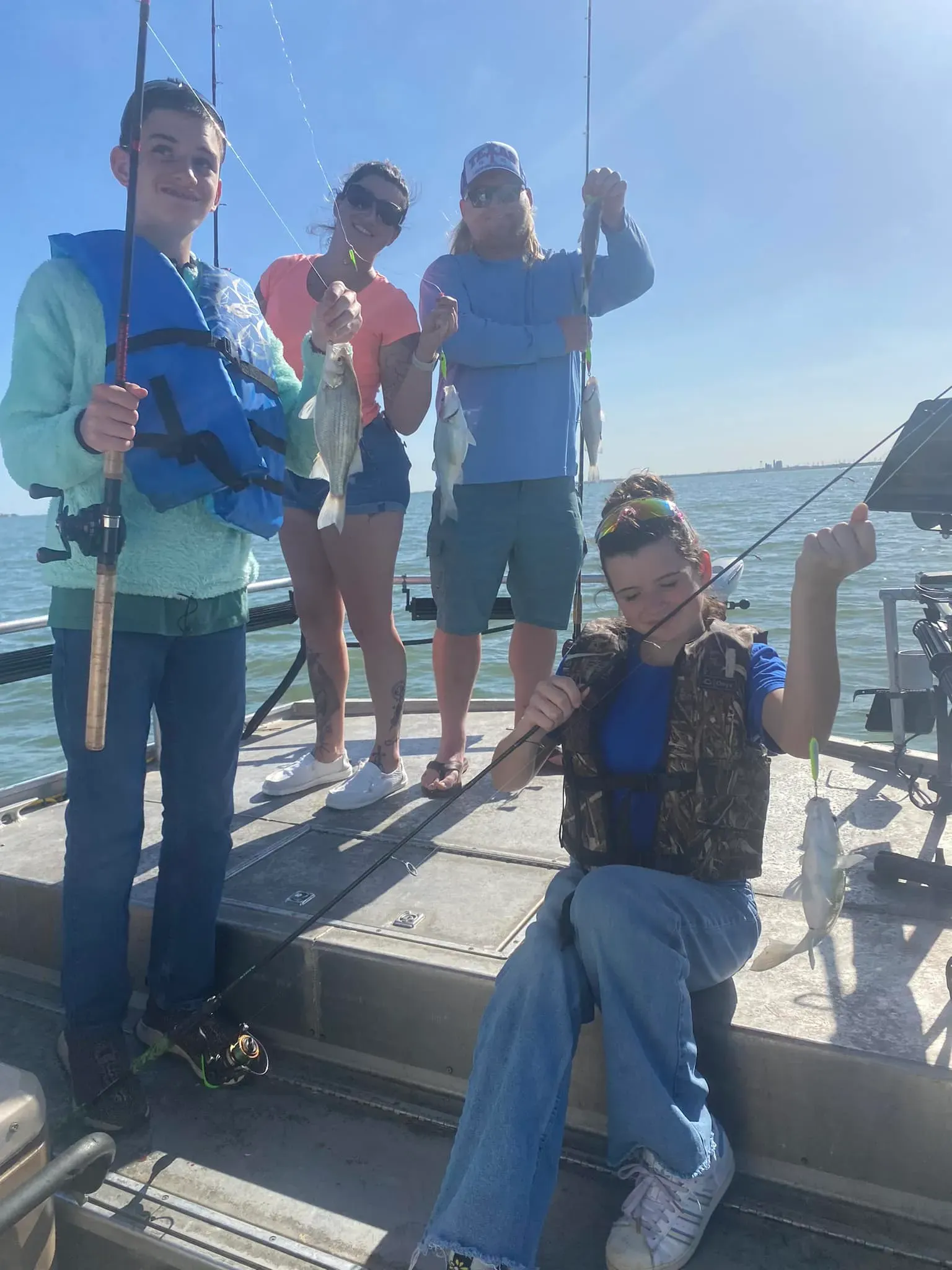
Spring offers several options for families because white bass, crappie, and catfish can become more active as water temperatures rise. Planning the trip around the target species can make the outing easier to manage.
Choose the Right Target
- White Bass: A good option when fish are actively feeding around points, humps, or creek-related areas.
- Crappie: A practical choice for slower fishing around brush piles, timber, and bridge structures.
- Catfish: Natural bait can be used around deeper channels, points, and flats.
Plan Around Comfort
Shorter trips can work well for younger anglers or families who do not want to spend an entire day on the water. Early morning and late afternoon can also provide comfortable fishing conditions.
Keep the Fishing Active
Moving between nearby productive areas can help maintain interest when fish stop biting. A Lake Ray Hubbard fishing guide can also adjust the location, depth, and target species based on current conditions.
Spring Night Fishing on Lake Ray Hubbard
After sunset, fish can change locations as water temperature, light levels, and baitfish movement shift. Structure and depth changes remain important when planning a night trip.
Productive Areas
- Points: Look for areas where shallow water drops into deeper sections.
- Channels: Deeper water can provide travel routes and holding areas for catfish.
- Brush and Timber: These structures can hold crappie at different depths.
- Bridge Structures: Lights and nearby structure can attract baitfish, which may bring predatory fish into the area.
Species to Target
- Crappie: Work brush piles, timber, and bridge structures with live minnows or small jigs.
- Catfish: Use natural bait around channels, points, and deeper flats.
- White Bass: Check areas with visible baitfish activity and current movement.
Night Fishing Setup
Keep tackle simple and organize your bait, lights, landing net, and other equipment before leaving the dock. For night fishing Lake Ray Hubbard, staying close to productive structure makes it easier to adjust your presentation or relocate when fish activity changes.
Fish Lake Ray Hubbard With Lead SlingersFish Lake Ray Hubbard With Lead Slingers
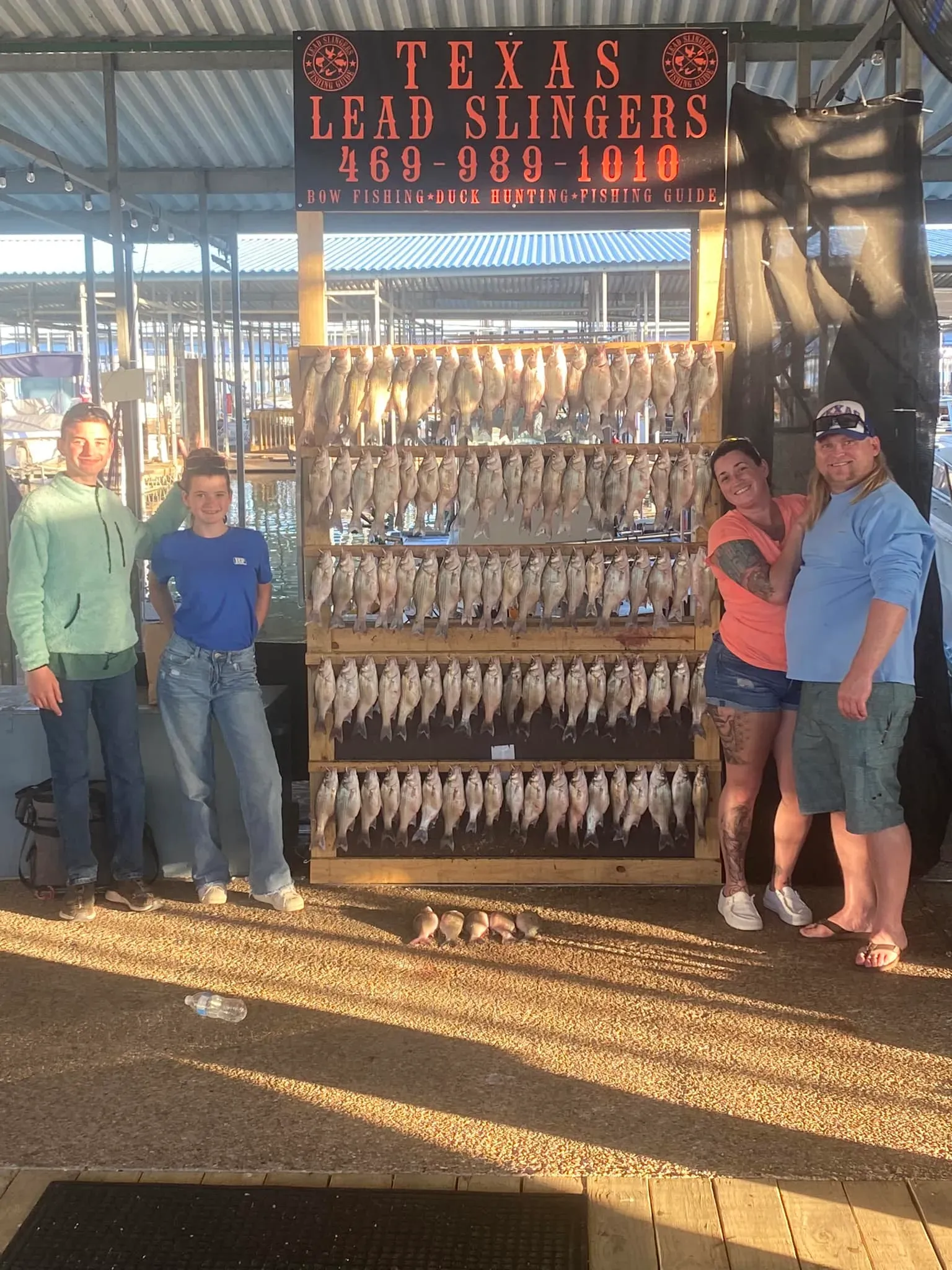
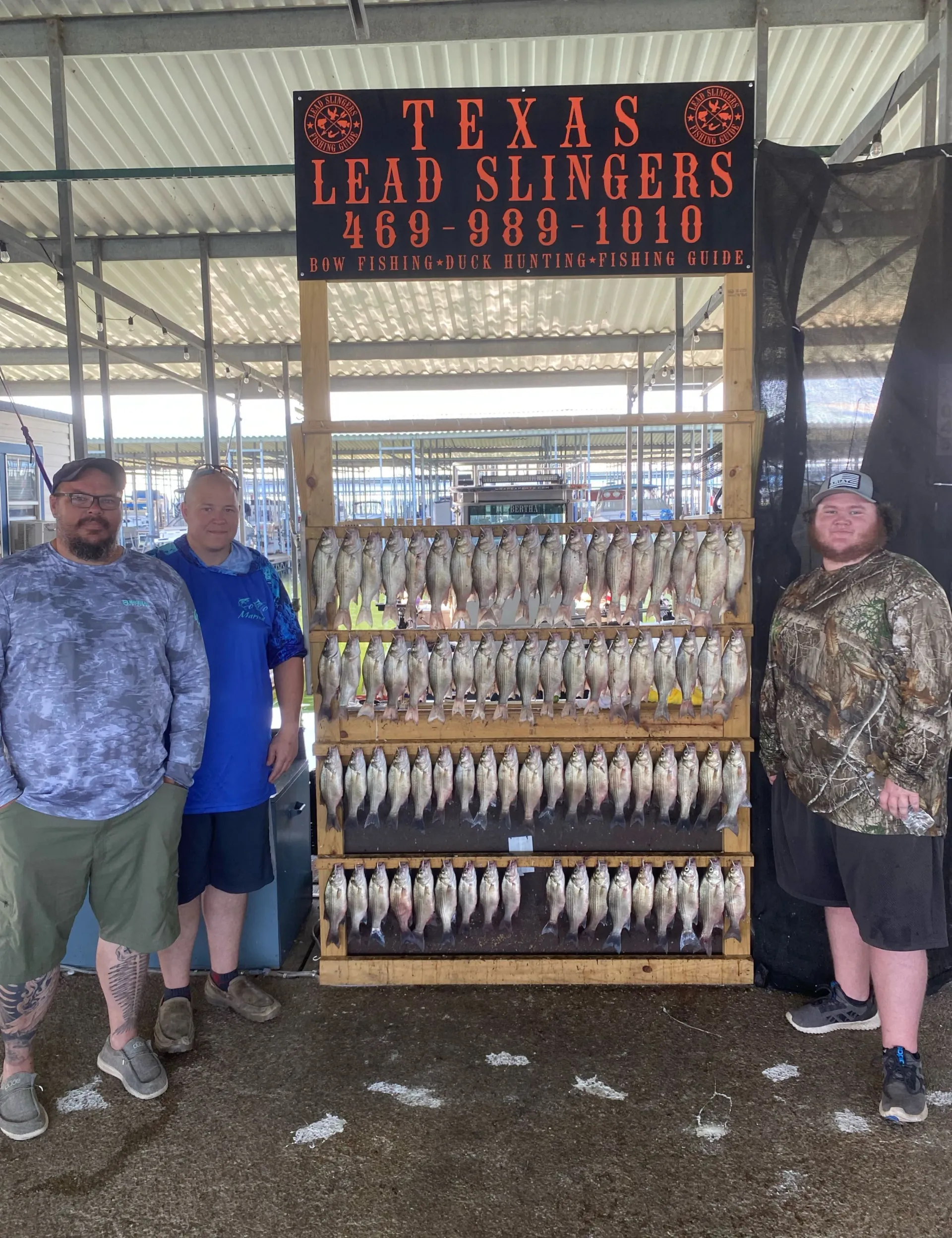
Lead Slingers provides guided fishing trips on Lake Ray Hubbard with fully equipped boats and experienced guides who know the lake's fishing areas and seasonal patterns. Trips include fishing equipment, rods, reels, bait, lures, and custom tackle, so anglers have the gear needed for the day. The guides use Solix and Garmin LiveScope electronics to help locate fish and identify productive areas. Depending on the trip, anglers can target white bass, crappie, blue catfish, channel catfish, and other species available in the lake. Catch cleaning and filleting are also included. Lead Slingers welcomes anglers of different experience levels, including beginners and families, making its guided trips suitable for those planning Lake Ray Hubbard fishing in spring.
Conclusion
Spring brings increased fish activity to Lake Ray Hubbard as warming water changes where white bass, crappie, and catfish feed and hold. Points, channels, brush, timber, humps, and shallow flats can all become productive as the season progresses. Choosing the right depth and technique based on current conditions can help you spend more time fishing productive water. Ready to fish Lake Ray Hubbard this spring? Book your trip with Lead Slingers and fish with a local Lake Ray Hubbard fishing guide.
FAQs
- Is spring a good time to fish Lake Ray Hubbard?
Yes. Rising water temperatures increase fish activity and create opportunities for white bass, crappie, catfish, and other species. - What fish can you catch on Lake Ray Hubbard in spring?
Common spring targets include white bass, crappie, blue catfish, channel catfish, and hybrid striped bass. - When is the best month for spring fishing on Lake Ray Hubbard?
March through May can offer good opportunities, but the best period depends on water temperature, fish movement, and current conditions. - Where should I fish for white bass in spring?
Check points, humps, creek-related areas, channels, and locations where baitfish are active as spring progresses. - Where can I find crappie on Lake Ray Hubbard in spring?
Look around brush piles, standing timber, bridge structures, and changing depths as crappie move toward shallower spawning habitat. - Can you catch catfish on Lake Ray Hubbard in spring?
Yes. Channels, points, flats, and deeper edges can hold blue and channel catfish as feeding activity increases during spring. - What is the best bait for spring fishing on Lake Ray Hubbard?
Bait depends on the target species. Live minnows work well for crappie, while natural bait can be effective for catfish. - What time of day is best for spring fishing?
Early morning can be productive, but midday, afternoon, and evening can also produce fish depending on feeding activity and water conditions. - Is spring a good time for family fishing on Lake Ray Hubbard?
Yes. Several species become active in spring, allowing families to plan shorter outings around white bass, crappie, or catfish. - Can a Lake Ray Hubbard fishing guide help with spring fishing?
Yes. A local guide can adjust locations, depths, bait, and techniques based on seasonal fish movement and current lake conditions.