/filters:format(jpeg,png)/fit-in/300x300/guide_websites/1085/images/1773333909358image9.png)
/filters:format(jpeg,png)/fit-in/237x80/guide_websites/1085/images/1773333909358image9.png)
Lake Ray Hubbard Catfish Fishing Guide
%2Ffit-in%2F1000x1000%2Ffilters%3Aformat(webp)%2Fguide_websites%2F1085%2Fimages%2F1773338845571image44.png&w=1920&q=75)
Published: September 21, 2026
Lake Ray Hubbard is a strong destination for anglers targeting catfish, with blue catfish and channel catfish providing opportunities throughout the year. Fish location can change with water temperature, baitfish movement, depth, and seasonal conditions. For Lake Ray Hubbard catfish fishing, knowing which species to target and where they are likely to hold can make trip planning easier. Deeper channels, points, structure, and areas with available food can all become important at different times of the year.

What Catfish Can You Catch in Lake Ray Hubbard?
Lake Ray Hubbard supports both blue catfish and channel catfish. While the two species can overlap in some areas, their size, feeding habits, and fishing patterns give anglers different reasons to target each one.
Blue Catfish
Blue catfish are a major attraction for anglers interested in larger catches. They can grow substantially and are a natural target for trophy catfish fishing Lake Ray Hubbard.
Where to look
- Deep Channels: Check deeper water and channel edges, especially when temperatures change.
- Structure: Look around submerged structure, timber, and areas where deeper water meets cover.
- Baitfish: Areas with concentrated forage can attract feeding blue catfish.
Best approach
Cut bait and other fresh bait presentations can be useful when targeting larger blue catfish. Depth and bait placement should be adjusted according to where fish are holding.
Channel Catfish
Channel catfish provide another consistent target for anglers on Lake Ray Hubbard. They can be a good choice for anglers who want steady catfish action rather than focusing exclusively on larger fish.
Where to look
- Channels: Deeper channels and their edges can hold fish.
- Structure: Check areas with timber, cover, and changes in depth.
- Food Sources: Focus on locations where bait and other food are available.
Best approach
Prepared baits and natural bait can be effective options for channel catfish. Bottom fishing around productive structure is a practical way to keep bait in the strike zone.
Best Time for Catfish Fishing on Lake Ray Hubbard
Catfish can be caught throughout the year, but their activity and location change as water temperatures and feeding conditions change. The best season depends on the type of fishing and fish size you want to target.
Spring
Warming water can increase catfish activity and change their location as fish respond to seasonal temperature shifts. This makes spring a useful period for anglers planning Lake Ray Hubbard fishing trips.
Focus on:
- Water: Areas transitioning between shallow and deeper water
- Structure: Points, channels, and available cover
- Bait: Fresh or natural bait around areas where fish are feeding
Summer
Summer brings warmer water and creates opportunities to target catfish around deeper areas. Early morning, evening, and nighttime can be useful periods, particularly during hotter weather.
Focus on:
- Depth: Deeper channels and areas with stable water conditions
- Structure: Channel edges, points, and submerged cover
- Timing: Early morning, evening, and night fishing Lake Ray Hubbard
Fall
Cooling water can trigger increased feeding activity as catfish respond to changing conditions and available forage. Following baitfish can help identify productive areas.
Focus on:
- Location: Channels, points, and deeper structure
- Forage: Areas where baitfish are concentrated
- Technique: Bottom presentations and drifting to cover different areas
Winter
Colder water can slow catfish activity and push fish toward deeper, more stable areas. Anglers may need to spend more time identifying the right depth before settling into a productive location.
Focus on:
- Depth: Deeper channels and stable holding areas
- Structure: Channel edges and deeper cover
- Presentation: Slower, bottom-oriented approaches
Where to Find Catfish on Lake Ray Hubbard
Catfish are not spread evenly across the lake. Their location can change with season, water temperature, depth, and available food. For Lake Ray Hubbard fishing, focusing on structural changes and deeper areas can help narrow the search.
River Channels and Deep Water
Deeper channels provide important habitat and can become especially useful during summer and winter.
Look for:
- Channel bends
- Deep sections
- Changes in depth
- Areas connecting deeper and shallower water
Points and Channel Edges
Points create changes in depth that can give catfish access to different parts of the lake. Channel edges can also provide travel and feeding areas.
Check:
- Points extending into deeper water
- Drop-offs
- Channel transitions
- Areas close to available forage
Timber and Submerged Structure
Structure gives catfish areas to hold and can also attract the food they follow. Standing timber and submerged cover are worth checking when they are located near deeper water.
Key areas:
- Standing timber
- Submerged cover
- Structure near channels
- Cover close to baitfish activity
Baitfish Concentrations
Food availability can be just as important as structure. If baitfish are concentrated in an area, it can be worth checking the surrounding depths and structure for feeding catfish.
A Lake Ray Hubbard fishing guide can help anglers narrow down these areas based on the season and current conditions.
Best Catfish Baits for Lake Ray Hubbard
Bait choice can make a difference when targeting blue or channel catfish. The best option depends on the species, water conditions, and whether you are looking for steady action or larger fish.
Cut Bait
Cut bait is a useful option for anglers targeting blue catfish, particularly when fishing deeper water and areas where larger fish may be feeding.
- Best for: Blue catfish and larger fish
- Where to use it: Deep channels, channel edges, and structure
- Presentation: Keep the bait near the bottom and adjust the weight to maintain contact with the target depth
Live Bait
Live bait can be effective when catfish are actively feeding. It can also give anglers flexibility when fish are moving between depths or locations.
- Best for: Active blue and channel catfish
- Where to use it: Channels, points, structure, and areas holding forage
- Presentation: Adjust the depth based on where fish are showing activity
Prepared Baits
Prepared baits can be a practical choice when targeting channel catfish. Their scent can help attract fish, making them useful for anglers focused on consistent action.
- Best for: Channel catfish
- Where to use it: Structure, channels, and areas with feeding activity
- Presentation: Bottom fishing is a simple way to keep the bait close to the lake floor
Catfish Fishing Techniques That Work on Lake Ray Hubbard
The right technique depends on where catfish are holding. Lake Ray Hubbard fishing can involve covering deeper water, working specific structure, or keeping bait in one productive area.
Bottom Fishing
Bottom fishing is one of the simplest ways to target catfish because it keeps bait close to the lake floor where fish may be feeding.
Use it when:
- Catfish are holding near deeper channels
- Fish are close to structure
- You have identified a productive depth
Key adjustment: Use enough weight to keep your bait where you want it without making the presentation unnecessarily heavy.
Drift Fishing
Drift fishing allows anglers to cover water instead of staying in one location. It can be useful when catfish are spread across an area and you are still trying to locate active fish.
Use it when:
- Fish are not concentrated in one spot
- You want to cover different depths
- Wind or current creates a manageable drift
Main advantage: You can test multiple areas and depths without repeatedly repositioning the boat.
Anchored Structure Fishing
Once you locate productive structure, anchoring can keep your bait in the area where catfish are holding.
Good locations include:
- Channel edges
- Points
- Deep structure
- Areas holding baitfish
This approach can be especially useful when targeting larger blue catfish around specific structure.
Night Fishing
Night fishing Lake Ray Hubbard can be an option during warmer months when catfish become active after sunset. Deeper channels, points, and areas with available forage can be worth checking.
Best approach:
- Set up near productive structure
- Keep bait close to the bottom
- Focus on areas where fish can move between deeper and shallower water
Best Time of Day for Lake Ray Hubbard Catfish Fishing
Catfish can feed at different times of the day, but seasonal conditions can influence when activity is strongest. Instead of relying on one fixed fishing window, match your timing to water temperature and fish location.
Early Morning
Cooler conditions can make early morning a useful period, especially during warmer months.
Focus on: Deeper edges, points, and areas where baitfish are active.
Daytime
Daytime fishing can remain productive when catfish are holding around deeper structure. This can be particularly useful during hot weather when fish move away from shallower areas.
Focus on: Channels, deep structure, and areas with consistent depth changes.
Evening and Night
Evening can bring increased feeding activity as temperatures begin to fall. During summer, this also creates an opportunity for night fishing Lake Ray Hubbard.
Focus on: Channel edges, points, deeper structure, and areas where forage is concentrated.
For anglers planning Lake Ray Hubbard fishing charters, choosing the right time of day alongside the seasonal pattern can help create a more focused catfish outing.
How to Plan a Lake Ray Hubbard Catfish Fishing Trip
Planning around the target species, season, location, and fishing method can help you choose the right setup and make better use of your time on Lake Ray Hubbard.
- Step 1: Choose Your Target: Decide if you want to focus on blue catfish for larger catches or channel catfish for steady action.
- Step 2: Pick the Season: Spring and fall can offer active feeding, while summer and winter require adjustments for changing water temperatures.
- Step 3: Select the Location: Focus on channels, points, deep structure, timber, and areas where baitfish are concentrated.
- Step 4: Choose Your Technique: Use bottom fishing, drift fishing, anchored structure fishing, or night fishing based on fish location and conditions.
- Step 5: Prepare Your Bait: Choose cut bait, live bait, or prepared bait based on the catfish species and fishing approach.
Fish Lake Ray Hubbard With Lead SlingersFish Lake Ray Hubbard With Lead Slingers
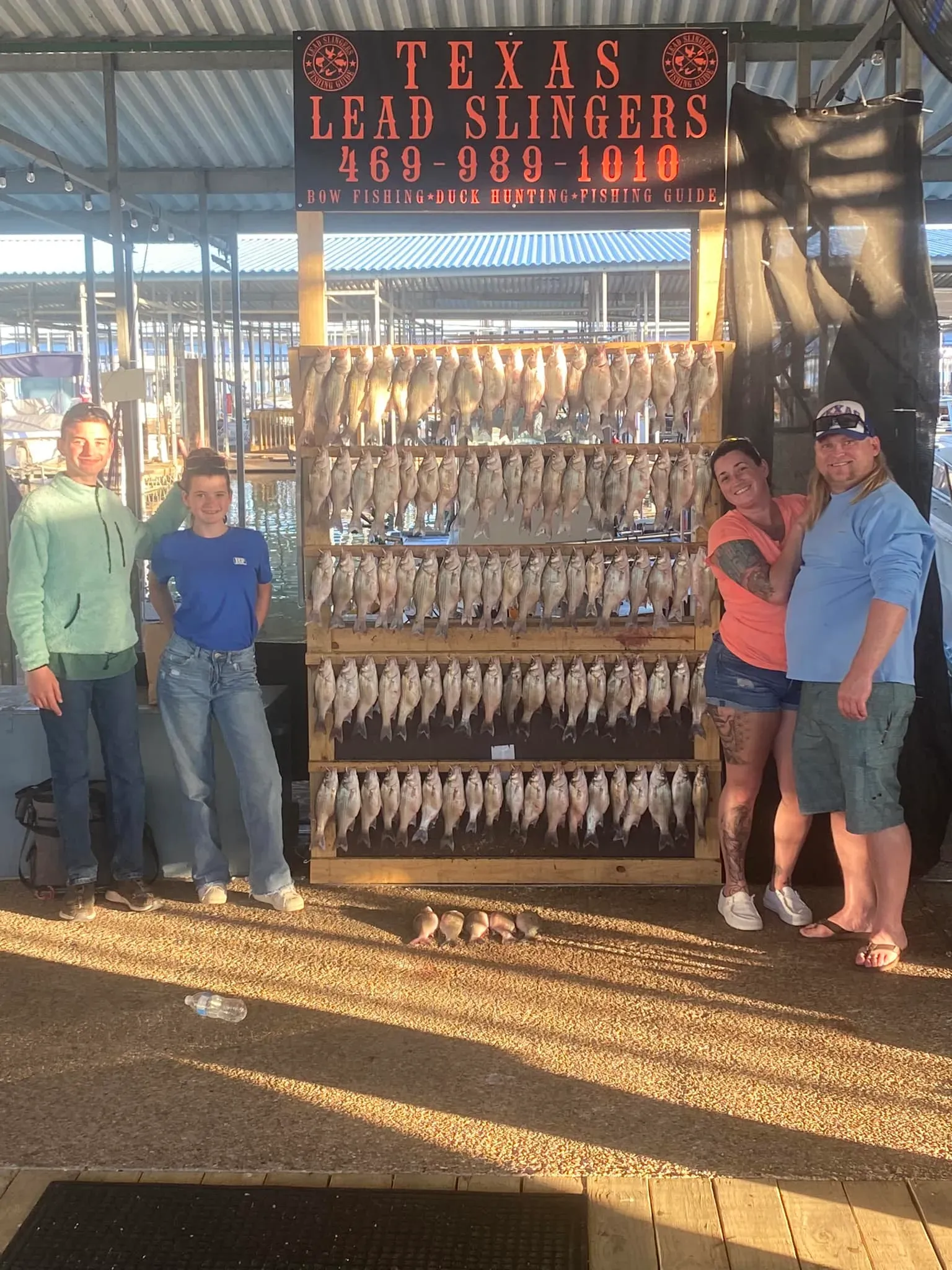
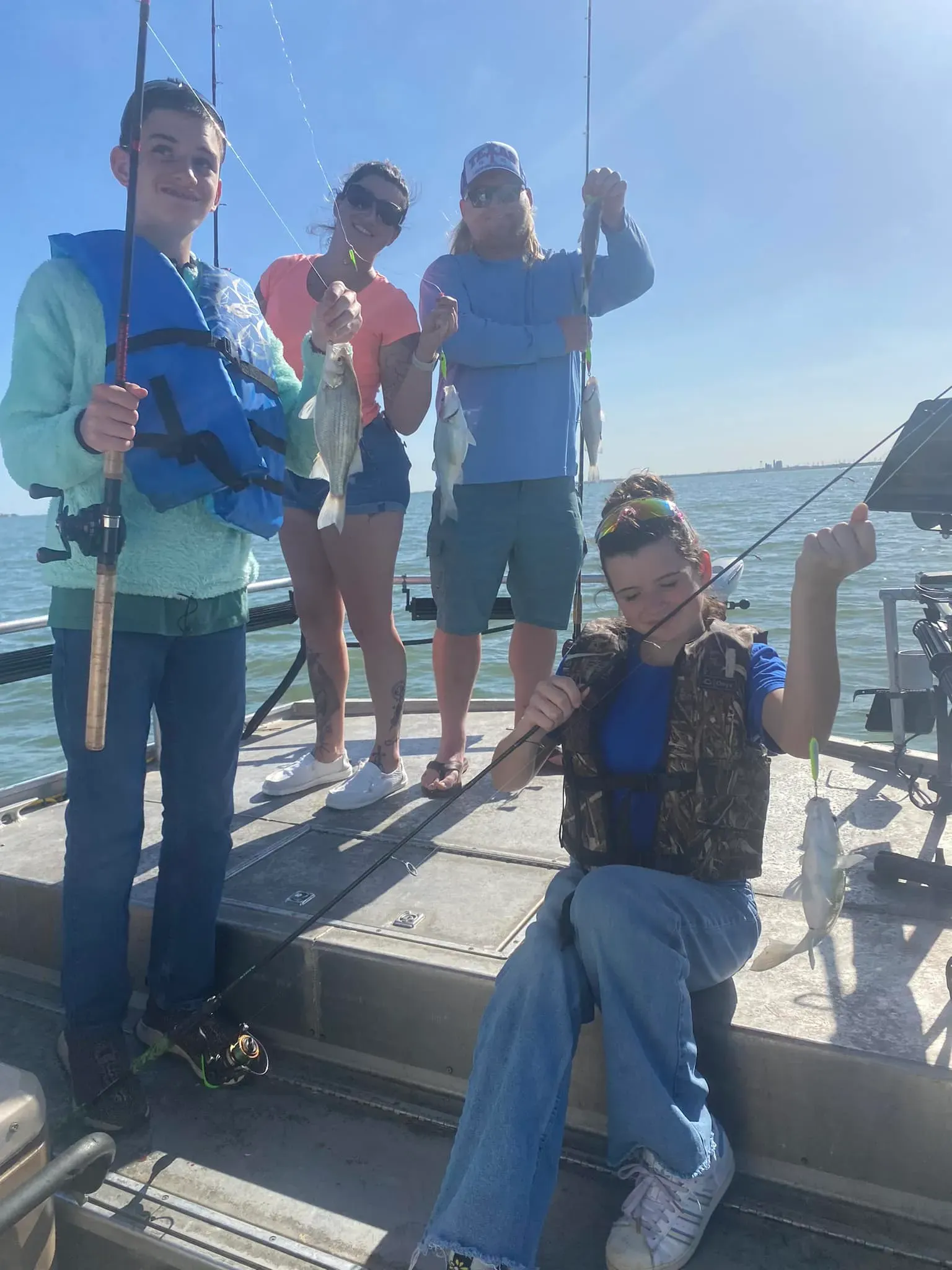
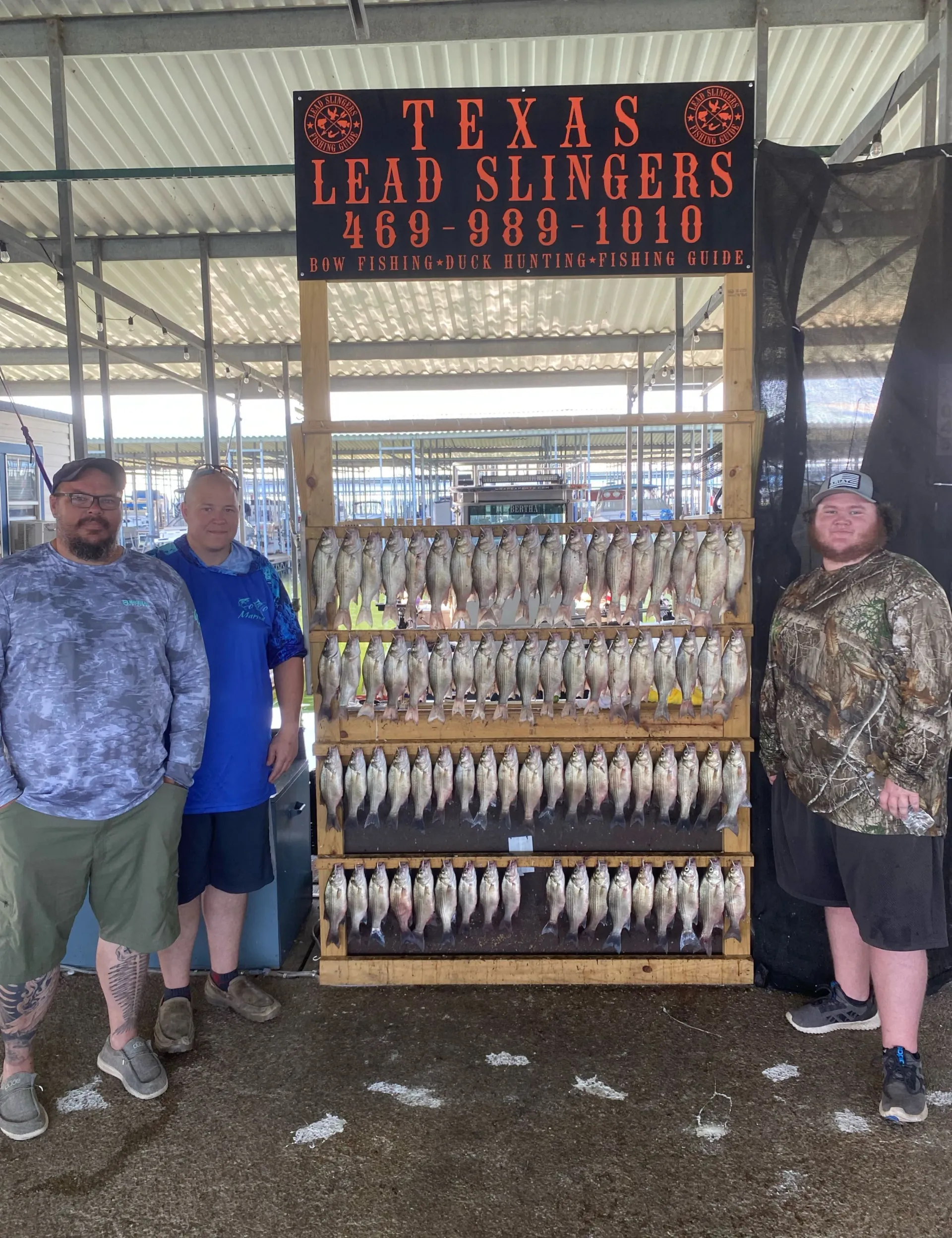
Lead Slingers provide guided Lake Ray Hubbard fishing trips for anglers targeting blue catfish and channel catfish throughout the year. Our guides adjust the approach based on seasonal fish movement, depth, structure, and current conditions. We provide rods, reels, tackle, bait, lures, and custom tackle for the trip, so anglers can focus on fishing. Our experience on Lake Ray Hubbard also helps us choose an approach suited to the fish you want to target, from larger blue catfish to steady channel catfish action. We welcome different experience levels, including families planning family fishing Lake Ray Hubbard. For anglers looking for a fishing guide near Dallas, our guided trips provide a focused way to spend a day targeting catfish on the lake.
Conclusion
Lake Ray Hubbard catfish fishing offers opportunities throughout the year, but the best approach changes with the season. Blue catfish and channel catfish can use different areas as water temperatures, baitfish, and feeding patterns change.
Spring and fall can bring active feeding periods, while summer creates opportunities around deeper water and at night. Winter generally calls for deeper areas and slower presentations. Ready to plan your next Lake Ray Hubbard fishing charter trip? Contact Lead Slingers to target catfish with a seasonal approach built around current lake conditions.
FAQs
- What catfish can you catch in Lake Ray Hubbard?
Lake Ray Hubbard offers opportunities to catch blue catfish and channel catfish. Blue catfish are especially appealing to anglers targeting larger fish. - What is the best time to catch catfish on Lake Ray Hubbard?
Catfish can be caught throughout the year. Spring and fall can bring active feeding, while summer and winter require adjustments for changing water temperatures. - What is the best bait for Lake Ray Hubbard catfish?
Cut bait can be useful for blue catfish, while live and prepared baits can work for different catfish situations and target species. - Where should I look for catfish on Lake Ray Hubbard?
Focus on river channels, points, channel edges, timber, submerged structure, and areas where baitfish are concentrated. - What depth should I fish for catfish on Lake Ray Hubbard?
Catfish depth changes with the season and conditions. Deeper channels and structure are particularly important during summer and winter. - Is night fishing good for catfish on Lake Ray Hubbard?
Yes. Night fishing Lake Ray Hubbard can be a useful option during warmer months when catfish become active after sunset. - Can you catch trophy catfish on Lake Ray Hubbard?
Yes. Blue catfish are a popular target for anglers interested in larger catches and trophy catfish fishing Lake Ray Hubbard. - What technique works best for Lake Ray Hubbard catfish?
Bottom fishing, drift fishing, anchored structure fishing, and night fishing can all be effective depending on fish location, season, and conditions. - Is Lake Ray Hubbard good for family catfish fishing?
Yes. Family fishing Lake Ray Hubbard can provide opportunities to target channel catfish and blue catfish with approaches suited to different experience levels. - Can a Lake Ray Hubbard fishing guide help with catfish fishing?
Yes. A Lake Ray Hubbard fishing guide can help identify productive seasonal areas, select suitable bait, and adjust techniques based on current conditions.