/filters:format(jpeg,png)/fit-in/300x300/guide_websites/1085/images/1773333909358image9.png)
/filters:format(jpeg,png)/fit-in/237x80/guide_websites/1085/images/1773333909358image9.png)
Crappie Fishing Near Dallas
%2Ffit-in%2F1000x1000%2Ffilters%3Aformat(webp)%2Fguide_websites%2F1085%2Fimages%2F1773338845571image44.png&w=1920&q=75)
Published: September 21, 2026
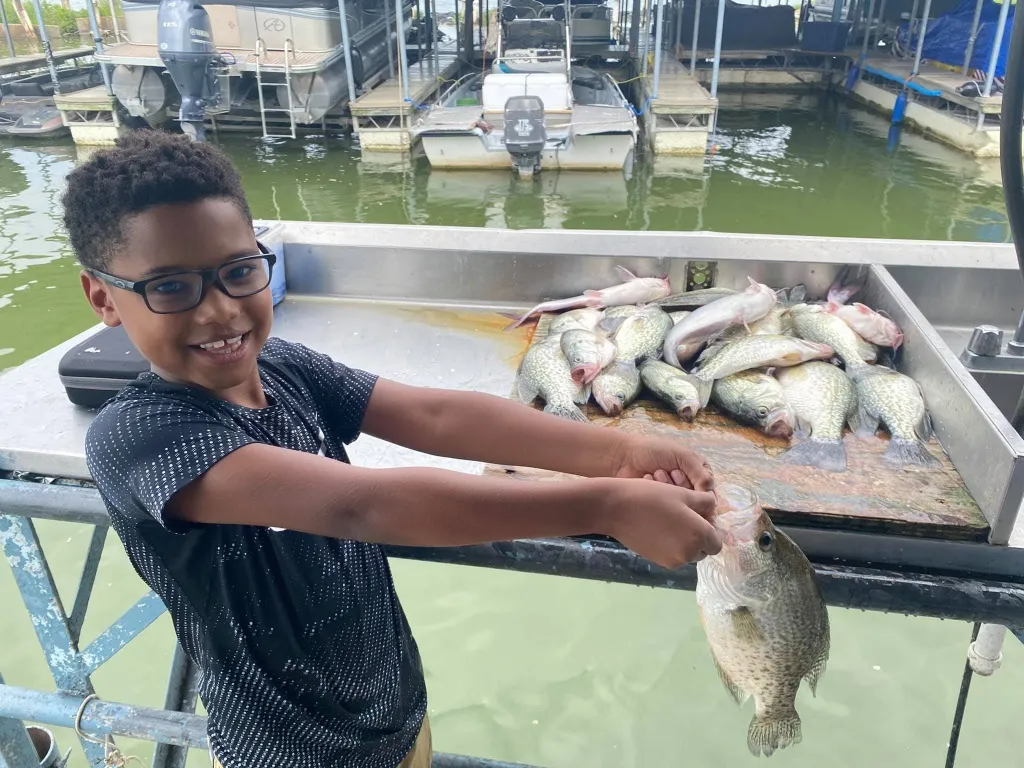
Crappie are a popular target for anglers around Dallas, and Lake Ray Hubbard provides a large and varied fishery for pursuing them throughout the year. The reservoir covers more than 21,000 acres and includes standing timber, brush piles, creek channels, flats, bridges, riprap, and deeper structure. These areas give crappie different places to feed and hold as conditions change. Water temperature and spawning activity can move fish into shallower areas during spring, while warmer summer conditions may push them toward deeper cover. Fall and winter can bring additional changes in depth and location. Understanding these seasonal patterns can make Crappie Fishing Near Dallas more productive. A Lake Ray Hubbard fishing guide can also help anglers locate productive structure and adjust presentations based on current conditions.
Why Is Lake Ray Hubbard Good for Crappie Fishing Near Dallas?
Lake Ray Hubbard gives crappie anglers a combination of convenient access, varied structure, and seasonal fishing opportunities. Knowing which habitat to check can make Lake Ray Hubbard crappie fishing more productive.
- Easy Access From Dallas: I-30 provides convenient access to Lake Ray Hubbard, with fishing areas around Rowlett and Rockwall. Choosing an access point near your planned fishing area can reduce unnecessary travel time.
- Large and Diverse Habitat: The reservoir covers more than 21,000 acres and includes standing timber, brush piles, creek channels, flats, points, riprap, and deeper water. This variety gives crappie different places to hold throughout the year.
- Abundant Crappie Structure: Brush piles and standing timber can provide important cover for crappie. Submerged structure is especially useful to check when fish are holding in predictable areas rather than roaming open water.
- Seasonal Crappie Movement: Spring can move crappie toward shallower spawning areas, while summer often pushes fish toward deeper cover. Fall and winter patterns can shift again as water temperatures change.
When Is the Best Time to Catch Crappie Near Dallas?
Crappie location changes throughout the year as water temperature, spawning activity, forage, and available structure change. Knowing the seasonal pattern helps anglers choose where to start and how deep to fish.
Spring: Follow the Spawning Movement
March through May can bring crappie toward shallower water as temperatures rise and spawning activity increases. Start around creek arms, coves, shallow cover, and areas close to deeper water. Small jigs and live minnows can be effective around brush and other structure.
- Best areas: Creek arms, coves, shallow cover, and nearby structure.
- Best clue: Warming water and movement toward shallow areas.
- Best techniques: Small jigs, soft plastics, and live minnows.
- How to adjust: Check progressively shallower water as fish move toward spawning areas.
Summer: Find Deeper Structure
As water temperatures rise, crappie can move toward deeper brush piles, standing timber, creek channels, and submerged structure. Electronics can help identify fish and determine how deep they are holding. Early mornings may offer comfortable conditions, but finding the correct depth is more important than simply fishing a specific hour.
- Best areas: Brush piles, timber, creek channels, and deeper structure.
- Watch for: Fish suspended around or above submerged cover.
- Best tool: Electronics for identifying depth and fish location.
- How to fish: Keep your bait close to the depth where fish are holding.
Fall: Follow the Bait and Cover
Cooling water can change crappie movement and bring fish toward different combinations of bait, structure, and depth. Check creek channels, points, brush, and timber where forage is concentrated. If one location does not show fish activity, move between nearby structures rather than continuing to fish empty cover.
- Best clue: Baitfish and crappie concentrated around structure.
- Best areas: Creek channels, points, brush, and timber.
- How to fish: Test several depths around productive cover.
- Key tactic: Move between structures until you find active fish.
Winter: Slow Down and Fish Deeper
During colder months, crappie may hold around deeper channels and submerged structure. Fish can become more concentrated, making electronics useful for locating productive areas before dropping a bait. Slower presentations and accurate depth control can help keep your offering in front of fish.
- Best areas: Deeper channels, brush piles, and submerged structure.
- Use electronics: Locate fish and determine their holding depth.
- Best technique: Slow presentations around concentrated fish.
- Depth: Keep the bait close to the depth shown on your electronics.
Where Should You Fish for Crappie on Lake Ray Hubbard?Where Should You Fish for Crappie on Lake Ray Hubbard?
Start by looking for submerged cover, changing depths, and areas where crappie can feed or hold. For Lake Ray Hubbard crappie fishing, brush piles, timber, creek channels, bridge structure, points, and drop-offs are practical places to begin.
Brush Piles and Submerged Cover
Brush piles are important places to check because crappie often use submerged cover for protection and feeding. Start by locating brush with electronics, then check the depth before dropping a bait. Fish the outside edges first and work closer to the cover if needed. This helps reduce snags while keeping your presentation near active fish.
Standing Timber
Standing timber provides vertical cover that can hold crappie at different depths. Start by scanning timber with electronics to determine where fish are positioned. Crappie may hold beside individual trees or gather around groups of submerged timber. Keep your bait at the marked depth and use controlled movements to avoid getting your tackle caught in branches.
Creek Mouths and Channels
Creek mouths and channels give crappie access to deeper water and nearby feeding areas. Check channel edges, especially where they meet brush, timber, or other cover. During seasonal movement, crappie may shift between shallow areas and these deeper routes. Use electronics to locate fish before choosing your presentation and adjust depth as conditions change.
Bridge Areas and Riprap
Bridge areas around I-30 and Highway 66 provide concrete structure and nearby riprap that can attract baitfish and crappie. Work the edges rather than casting directly into heavy structure. Short, controlled casts can help keep your bait near cover while limiting snags. Check nearby depth changes and bait activity before moving to another section.
Points and Drop-Offs
Points and drop-offs create transitions between shallow and deeper water that crappie can use during seasonal movement. Start on the shallow side and gradually check deeper water. Look for nearby brush or timber that gives fish additional cover. Electronics can help identify the depth where crappie are holding, allowing you to keep your bait in the productive zone.
How Do You Find Crappie Before You Start Casting?
Finding crappie starts with locating cover and determining where fish are positioned around it. Use this process before making repeated casts on Lake Ray Hubbard fishing trips.
- Step 1: Locate the Structure: Start by finding brush piles, standing timber, creek channels, or other submerged cover. Structure gives you a specific area to investigate instead of fishing open water randomly.
- Step 2: Check the Depth: Use electronics to determine how deep the structure is and where fish are positioned. Crappie may hold beside cover, above it, or closer to the bottom.
- Step 3: Find the Fish: Scan the structure carefully for fish marks. Look for groups of crappie rather than assuming every brush pile contains active fish.
- Step 4: Check for Bait: Look for forage around the structure. Bait activity can help confirm that the area has feeding potential.
- Step 5: Test Different Depths: If fish are present but not biting, adjust your bait depth before leaving. Small changes can put your presentation directly in the fish-holding zone.
What Are the Best Baits and Lures for Crappie?
The best crappie presentation depends on fish depth, structure, season, and feeding activity. Having several options allows anglers to change the presentation without immediately leaving productive water.
- Small Jigs: Small jigs are useful around brush, timber, and shallow spawning areas. White, chartreuse, and other proven crappie colors can be good starting choices. Cast around cover or use a vertical presentation when electronics show fish beneath the boat.
- Soft Plastic Crappie Baits: Small soft plastics provide different profiles and colors for changing conditions. Use them around brush piles, timber, and channel edges, adjusting the jig size and retrieve to match the depth and activity of the fish.
- Live Minnows: Live minnows provide a natural presentation when crappie are holding around structure or deeper water. Keep the minnow near the depth where fish are marked rather than allowing it to drift far above or below the productive zone.
- Small Spoons: Small spoons can be useful when crappie are deeper or suspended away from cover. Allow the spoon to reach the desired depth, then vary the retrieve until you determine how actively fish are responding.
- Choosing the Right Presentation: Use lighter and slower presentations when crappie are less active. When fish are feeding more aggressively, increase movement and experiment with depth. Changing depth before abandoning productive structure can make Lake Ray Hubbard crappie fishing more efficient.
What Should Beginners Know Before Crappie Fishing Near Dallas?
Crappie fishing can be a good starting point for anglers who are learning how to read structure, control bait depth, and recognize fish activity. Beginners planning crappie fishing near Dallas should focus on a simple setup and learn how crappie respond to changes in depth and cover.
- Start With One Presentation: Begin with a small jig or live minnow instead of changing baits constantly.
- Learn Basic Casting: Practice placing your bait beside brush, timber, docks, or other cover where crappie may hold.
- Control Your Depth: Pay attention to where fish are holding and keep your bait at that level.
- Use Electronics: Learn to identify brush, timber, depth changes, and fish before spending too much time in one area.
- Follow Structure: Crappie often relate closely to cover, so focus on productive structure instead of randomly covering open water.
- Check Regulations: Review current Texas fishing regulations, including applicable limits and requirements, before keeping fish.
- Prepare for Weather: Bring suitable clothing, water, sunscreen, and other essentials for changing conditions during fishing trips near Dallas.
Can Families Fish for Crappie on Lake Ray Hubbard?
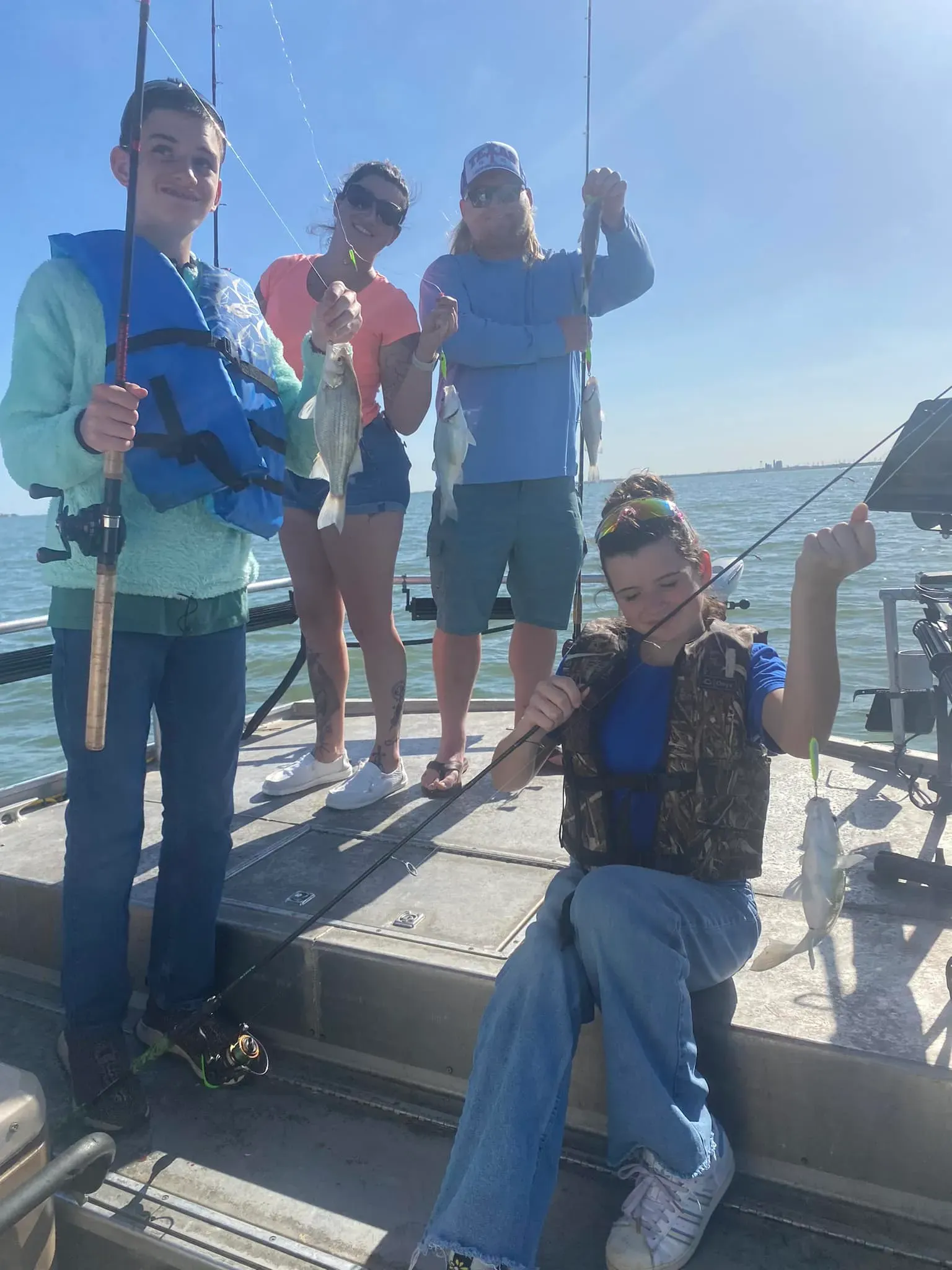
Crappie fishing can work well for families because the basic techniques are easy to learn and do not always require aggressive casting or fast retrieves. Anglers can fish around brush and timber with a small jig or live minnow while learning how to control depth and recognize bites.
For family fishing Lake Ray Hubbard, a guided trip can make the experience easier for children and first-time anglers. A guide can help with bait, tackle, positioning, and fish handling while keeping the focus on finding active crappie. Watching a float move or learning to feel a light crappie bite can also give younger anglers a simple way to stay involved throughout the trip.
What Is Included in a Lake Ray Hubbard Crappie Fishing Trip?
A guided crappie trip can simplify the planning process by providing the fishing equipment and tackle needed for the day. Before booking Lake Ray Hubbard fishing trips, confirm what the guide provides and what you need to bring.
Equipment
- Rods and reels
- Jigs
- Bait
- Lures
- Tackle
- Custom tackle
Boat and Fishing Equipment
- Fully equipped fishing boat
- Fishing equipment
- Safety equipment
After the Catch
- Catch cleaning
- Filleting
What the Angler Brings
- Texas fishing license
- Food and drinks
- Sunscreen
- Sunglasses
- Hat
- Weather-appropriate clothing
- Cooler
How to Plan a Crappie Fishing Trip Near Dallas
Planning a crappie trip starts with choosing the right season, fishing area, and presentation. Lake conditions can change the depth and location of crappie, so leave room to adjust your plan on the water.
- Step 1: Choose Your Fishing Season: Spring is a strong period to target moving crappie, while summer and winter can require more attention to deeper structure.
- Step 2: Pick Your Fishing Window: Choose a time that works with weather conditions and your preferred fishing approach.
- Step 3: Choose Your Access: Rowlett and Rockwall provide access to different parts of Lake Ray Hubbard.
- Step 4: Check Conditions: Review water temperature, recent weather, wind, and lake conditions before heading out.
- Step 5: Prepare Your Gear: Bring small jigs, soft plastics, live minnows, suitable tackle, and equipment for fishing around cover.
- Step 6: Decide on a Guide: A fishing guide near Dallas can help locate productive structure, identify fish depth, and adjust presentations during the trip.
Fish for Crappie With Lead SlingersFish for Crappie With Lead Slingers
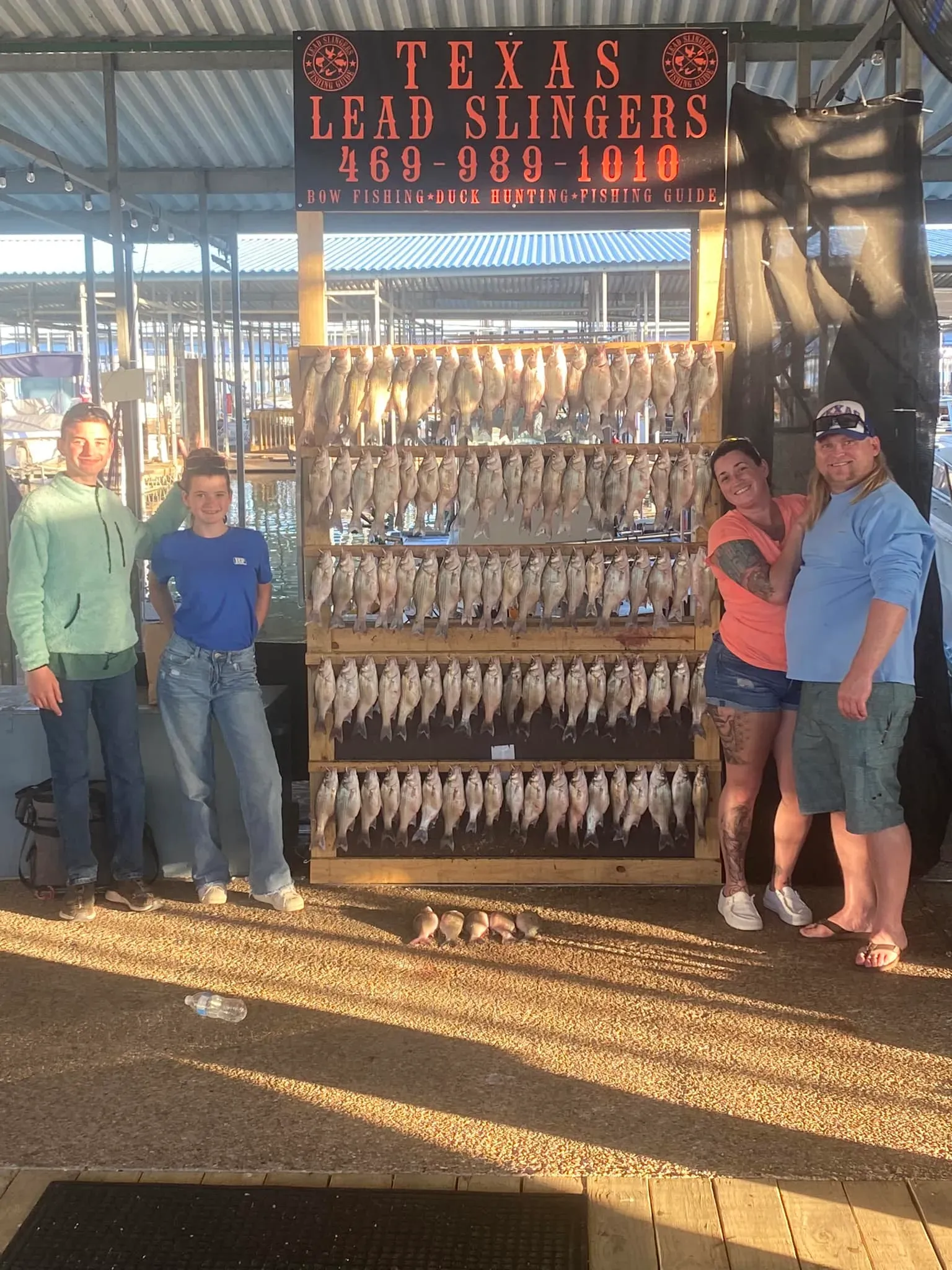
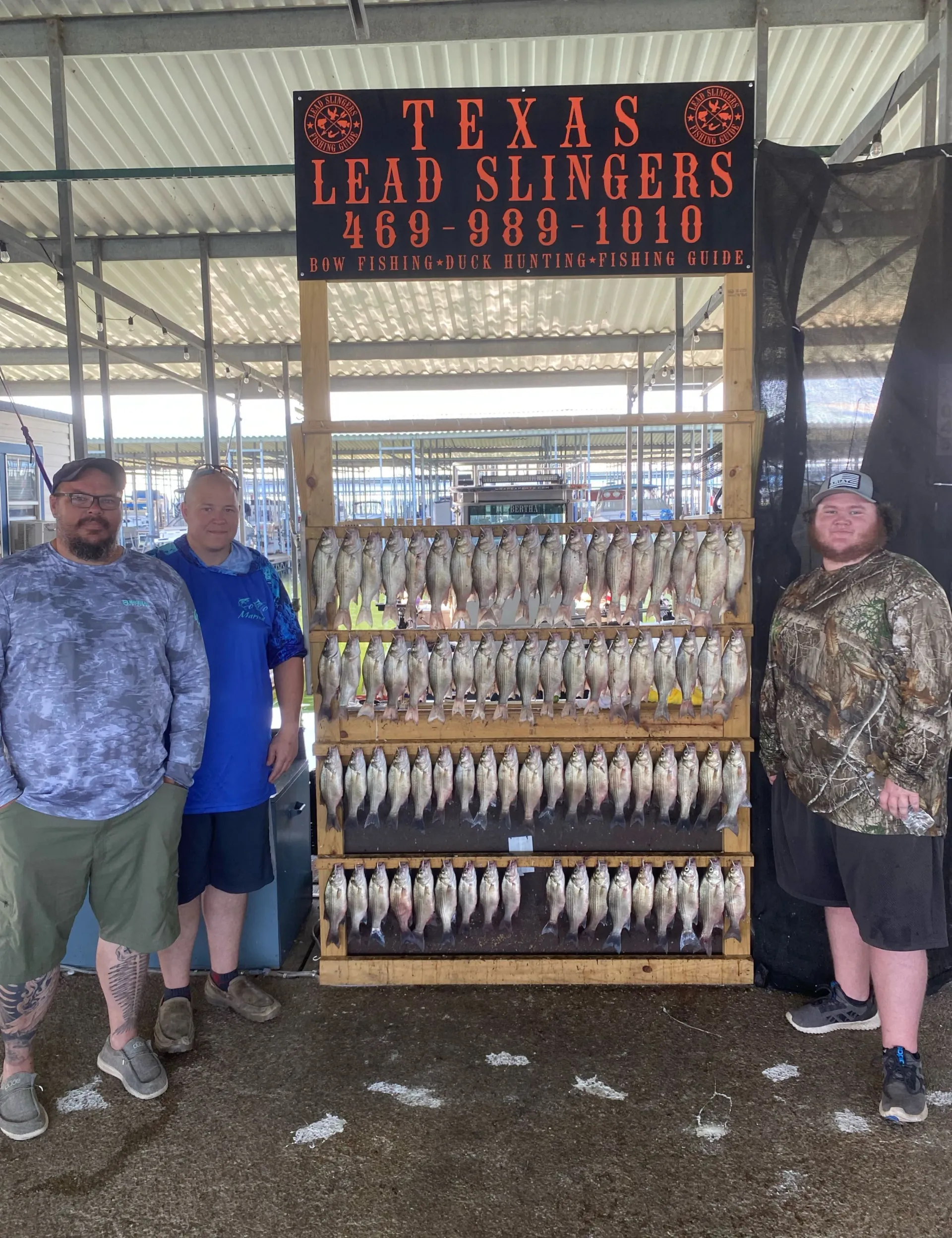
Lead Slingers provides guided fishing trips on Lake Ray Hubbard for anglers looking to target crappie and other freshwater species. We fish different areas of the reservoir based on seasonal movement, water conditions, fish location, and available structure. Our guides provide the rods, reels, bait, lures, custom tackle, and other fishing equipment needed for the trip, making it easier for guests to focus on learning the techniques and finding fish. We welcome beginners, families, and experienced anglers, so our approach can be adjusted to the group's experience level. Brandon Sargent has more than eight years of guiding experience in the Dallas-Fort Worth area, while William Guy brings additional experience with Lake Ray Hubbard fishing and specializes in catfishing. We also handle catch cleaning and filleting after the trip, giving anglers a convenient way to prepare their catch.
Conclusion
Crappie fishing near Dallas can be productive throughout the year when anglers understand how fish respond to changing water temperatures, spawning activity, bait, and structure. Lake Ray Hubbard offers brush piles, timber, channels, points, and other areas worth targeting at different times of year. Adjusting bait depth and presentation is essential when fish change position. For help locating productive water and learning effective techniques, book a trip with a Lake Ray Hubbard fishing guide at Lead Slingers Outdoor Fishing Guide.
FAQs
- What is the best month for crappie fishing near Dallas?
April and May can be productive as warming water moves crappie toward shallower areas and spawning habitat. - Where can I catch crappie on Lake Ray Hubbard?
Check brush piles, standing timber, creek channels, bridge areas, riprap, points, and drop-offs where crappie can find cover. - What is the best bait for crappie on Lake Ray Hubbard?
Live minnows are a reliable choice, while small jigs and soft plastics can also work around submerged structure. - What lures work best for Lake Ray Hubbard crappie?
Small jigs and soft plastic crappie baits are common choices, especially when fishing around brush, timber, and channel edges. - When does the crappie spawn on Lake Ray Hubbard?
Crappie generally move toward shallower spawning areas during spring as water temperatures rise, with timing varying by conditions. - Can you catch crappie on Lake Ray Hubbard during summer?
Yes. During summer, crappie can hold around deeper brush, timber, creek channels, and submerged structure. - Where do crappie go in winter on Lake Ray Hubbard?
Crappie often move toward deeper water and may concentrate around channels, brush piles, and submerged structure. - Are crappie good for beginner anglers?
Yes. Beginners can learn basic jigging, casting, depth control, and structure fishing while targeting crappie. - Can families go crappie fishing on Lake Ray Hubbard?
Yes. Crappie fishing can be family-friendly, especially when using simple presentations such as live minnows or small jigs. - What does a Lake Ray Hubbard fishing charter include?
Guided trips can include rods, reels, bait, lures, custom tackle, fishing equipment, catch cleaning, and filleting.